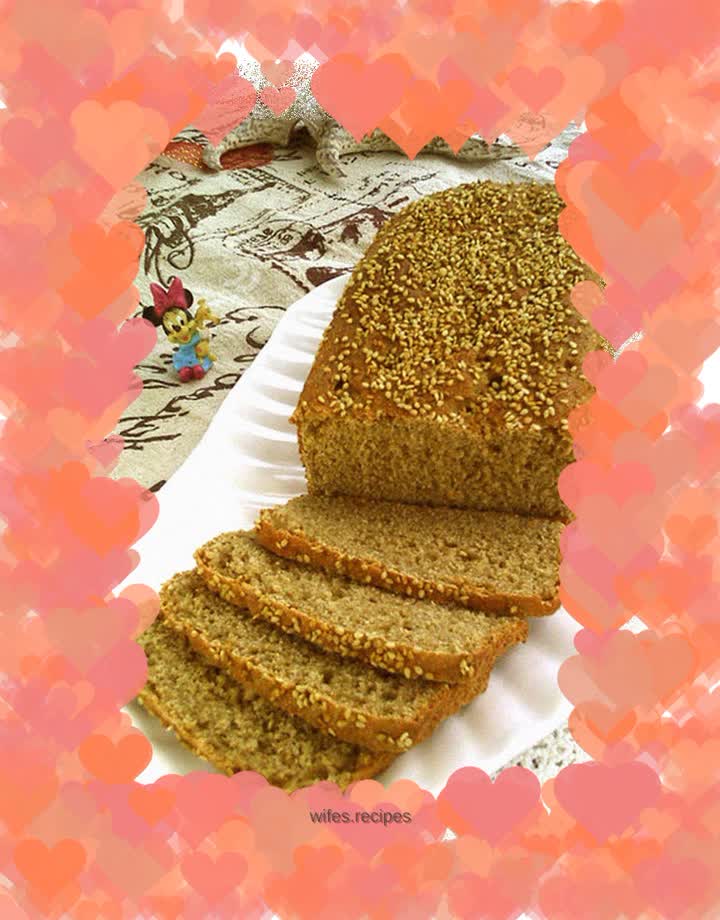
100% whole wheat toast
Now, some great baking books focus on 100% whole wheat bread. This bread has a very loyal and growing cult following. When making this kind of bread, bakers face two challenges: First, they must extract the best flavor of the grains while removing the grassy and bitter taste from the wheat bran and germ; second, they must find ways to make bread with the right taste and texture. We've learned in Thinking about the best way to awaken flavor - give the enzymes enough time to release the small sugar molecules trapped in the starch. When working with whole wheat bread, this can be achieved by using a large amount of starter. If using Polish starter or soaking liquid. In this recipe, we use both types of starter. The benefits of soaking liquids are particularly noticeable when whole grains are included in the recipe. We can substitute other grains such as corn and oats to change the taste of the finished product. Using a Polish starter increases fermentation time and improves flavor by creating a sour flavor that offsets the grassy and bitter flavors of wheat bran and germ. Use coarse whole wheat flour or other coarse grains for the soaking liquid. I don’t know how to make coarse whole wheat flour. But I still have a small amount of whole wheat flour with coarse grains on hand. Use a fine-mesh sieve to remove the fine particles, leaving the coarse particles. Surprisingly, you can get just the required amount - half of the original amount. The high-protein whole wheat flour used in the starter and main dough is difficult to figure out. Fortunately, there is an explanation later: the higher the protein content in the flour, the larger the pores in the bread center will be. The strongest flour is ground from hard spring wheat, but you can substitute regular whole wheat flour from the supermarket. High protein probably means that the flour has higher gluten strength, right? However, God knows what kind of gluten the whole wheat flour in hand has, but I can only use it. We can choose to use cooking oil or eggs, both of which can soften the bread. It seems like a choice between two, but in the production step, it is an addition. . . vegetable oil and eggs. There is no liquid used in the main dough, maybe it is better to use both? Polish starter is a moist starter that looks like a thick batter. However, once the water is poured into the whole wheat flour, it is quickly absorbed. There is no thick, runny batter, but a softer dough. The soaking liquid also looks a bit dry and has no liquid feel. I almost want to add a little moisture to make them a little more hydrated. However, it’s better to adjust according to the situation when it comes to making the dough. Fortunately no extra water was added. Just because of the dry appearance of the two starters, I added a little more 2 or 3 grams when adding oil and eggs. The result was that the seemingly dry starter was watery enough, but the final dough was a little too wet. What should have been added was flour instead of water. Finally, I was afraid that adding too much flour would make it too filling, so I just tried to make it not sticky. . . Perhaps success or failure lies in this. If the flour has too much water, will it not be able to grow too tall? Looking at its short stature, I don’t know whether it should be like this or the dough is too wet. It was somewhat depressing, and the only consolation was the thick texture and the aroma of sesame seeds. . . .
bread
Toast