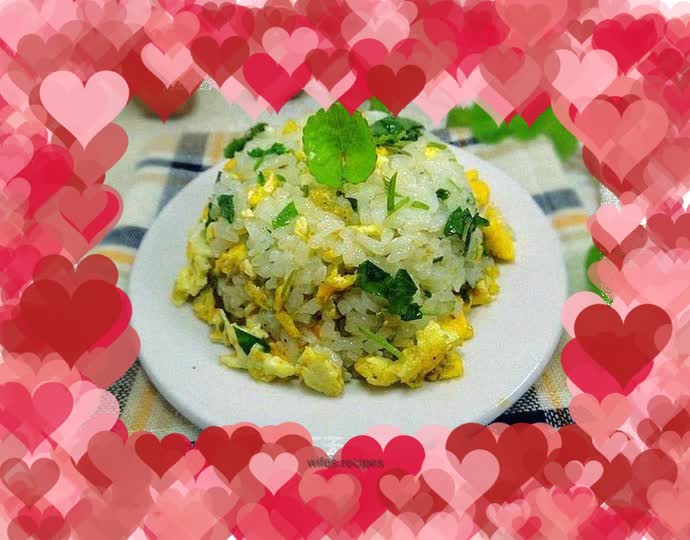
Horsetail egg rice
Yunnan is a kingdom of plants. Many plants are both medicinal materials and food. Horseshoe grass, which is commonly seen on roadsides and hillsides, is one of them. Elderly people often say that eating water chestnuts can treat and prevent liver disease. Therefore, for a long time, people have often had dishes such as cold water chestnuts and water chestnut omelets on their dining tables. I checked Baidu and found that water chestnuts really have this effect. I weeded the flowerpots in the morning and removed some water chestnuts. It was a pity to lose them. The amount of cooking was too little, so I had to use them to stir-fry a bowl of rice. Because water chestnuts have a light fragrance, and there is no need to add too many seasonings, the preparation is also simple. Horseshoe grass, scientific name: Centella asiatica. Alias: Bengdawan, Quebowan, Horseshoe grass, Gotu kola, Clamshell grass, Cricket grass, Luodeda, Shibaque, Lianlianweed, Ground line grass, Huogong root, Kuipengcai, Bengkou bowl, Begging bowl, Ditang grass, Big horseshoe grass, Soil fine grass Xin, money chisel, horseshoe crab, all over the ground, erigeron, cattle bath, wild shepherd's purse, wine glass, broken copper coins, half money, ground duckweed, wild winter cauliflower, Panlong grass, knotweed, big-leaf tendon grass, gourd grass, plum blossoms. Efficacy: clearing away heat and detoxifying, removing dampness and reducing swelling. It is a longevity medicine for the Orientals, which can benefit the brain and refresh the mind. Studies show tonic, anti-inflammatory, wound-healing, diuretic and laxative and sedative properties. It is a nerve tonic that can improve memory, reduce mental fatigue, lower blood pressure, and treat liver disease.
Staple food
Home cooking