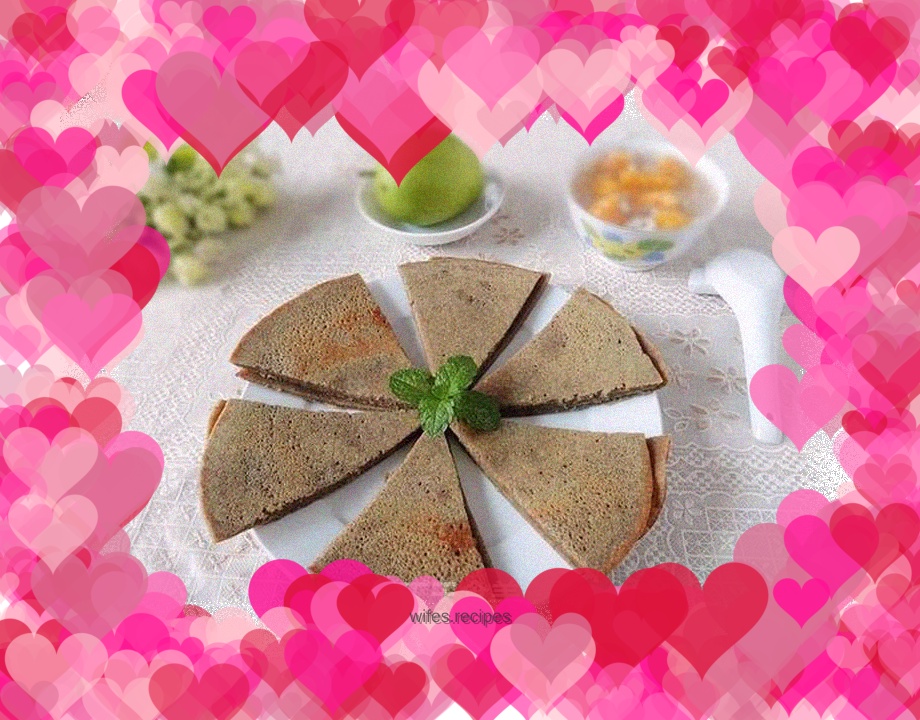
Milk fragrant rice and buckwheat cake
Rice buckwheat was given to me by a classmate who works in Ximeng. It has a light bitter taste. Occasionally, when I feel greasy, eating some rice buckwheat cakes can refresh my body. I am used to eating freshly ground rice buckwheat flour, which is easy to grind. People with diabetes can pour some water into the ground rice buckwheat flour to make a paste to make pancakes. Healthy people can add some milk and eggs to the flour to make the cake taste better. There was no fresh milk at home this morning, so I had to use powdered milk instead. Rice buckwheat is the finest quality buckwheat. It is a subspecies between tartary buckwheat and sweet buckwheat. The stems, leaves and flowers all have the characteristics of tartary buckwheat. After processing, the grains resemble millet and are called rice buckwheat. It was once distributed in parts of Pu'er, Xishuangbanna, Lincang and other areas of Yunnan Province. However, due to various reasons, it was almost on the verge of extinction. By the end of the last century, it was only distributed in small quantities in Ximeng Wa Autonomous County, Pu'er City, Yunnan Province. Due to its special attributes, it was named Ximeng Rice Buckwheat by some experts. Compared with sweet buckwheat and tartary buckwheat, Ximeng rice buckwheat has another major feature. It can be cooked and eaten without grinding it into powder after threshing. Ximeng rice and buckwheat is known as the king of grains. It is not only rich in nutrients, but also an important medicinal crop. Rutin and other elements in Ximeng rice buckwheat have various physiological activities. It can maintain the resistance of capillaries, reduce their permeability and fragility, promote cell proliferation and prevent the coagulation of blood cells. It has anti-inflammatory, anti-allergic, diuretic, hypolipidemic, cardiac and other effects. Long-term consumption has a good therapeutic effect on the treatment of hypertension, diabetes, etc.
Staple food
Pasta