1 recipe found
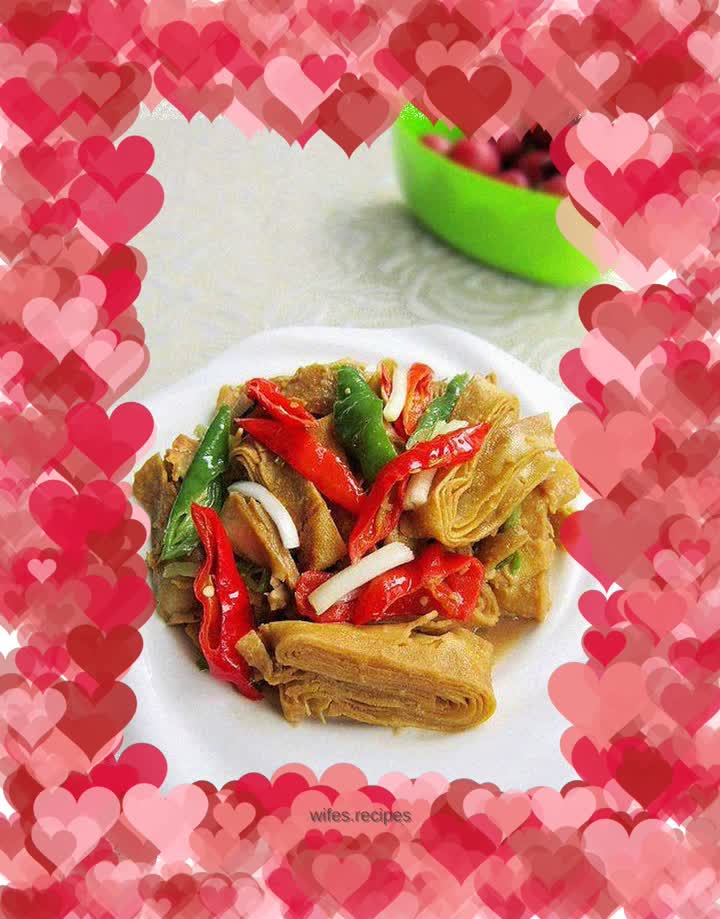
I bought two thousand sheets a few days ago and forgot to eat them. When I thought about it, I took them out and saw that they had changed the smell, just like the smell of stinky tofu. I might as well eat them as stinky thousand sheets if they stay stinky for a few days. In fact, my mother loved making stinky tofu when I was little. I remember that it was almost Chinese New Year. She bought a lot of qianzhang, rolled them up, and put them in a large basin with a lid and let them ferment naturally to smell. A layer of white fluff would appear on the top. My mother would fry it with green chili peppers, garlic sprouts or chives, and sometimes add a few drops of chili oil to make it taste as delicious as stinky tofu. The fried stinky Qianzhang has no smell at all, and only has a strong bean flavor in the mouth. It is mellow and delicious, and is perfect with rice. The soybean smells bad, but tastes delicious. The reason why it smells bad is because during the process of fermentation, flooding and post-fermentation of soybeans, the protein contained in the soybeans is decomposed by the action of protease, and the sulfur amino acids contained are also fully hydrolyzed, producing a compound called hydrogen sulfide (H2S), which has a pungent odor. After protein is decomposed, amino acids are produced, and amino acids have a delicious taste, so they are delicious. Jingqianzhang can replenish qi in the cold, harmonize the spleen and stomach, relieve distension and pain, clear away heat and dissipate blood, and reduce turbid qi in the large intestine. Those who eat it regularly can enhance their physical fitness and tone their skin.