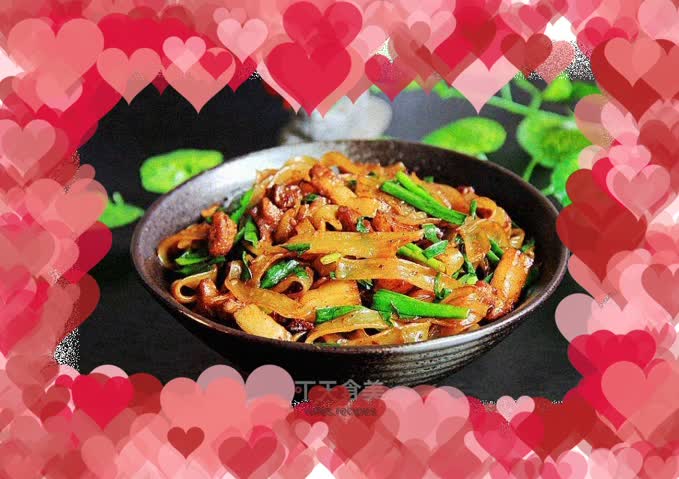
【Guangxi】Fried vermicelli
When I was a child, two months before the Spring Festival, my family would steam cassava flour or sweet potato flour, dry it and store it until the Spring Festival, so that it could be stewed or stir-fried during the festival. I still vaguely remember the process of my mother steaming tapioca flour. After the cassava is dug back, clean it and peel it. In a larger wooden basin, put a scraper (similar to a washboard) with a dense and uneven wooden pile at one end. Hold the cassava in your hand and rub it on the uneven wooden board. The cassava pulp will flow into the wooden basin. Filter the cassava pulp for two seconds. It becomes fine tapioca water starch. Let the tapioca water starch sit for 1 day. After the starch is completely precipitated, pour out the starch water. Add water to stir the settled starch evenly. Leave it for another day and then pour out the precipitated starch water. This process takes 4-5 days. This process is called bleaching in my hometown. The bleached tapioca starch is ready for steaming. Boil water in a larger wok, apply some cooked oil on the noodles, scoop out an appropriate amount of tapioca water starch, place it on the boiling water, cover it, steam for 3 minutes, uncover the lid, sink the noodles into the boiling water for a while, and then take it out To take out the vermicelli, use chopsticks to draw a circle around the vermicelli. It is easy to peel off the vermicelli and hang it on a bamboo pole. After draining the water, stack several pieces of vermicelli on top of each other, cut them into thin strips, and then dry them in the sun to make vermicelli. Nowadays, almost no one makes vermicelli in my hometown. Firstly, it is complicated to make, and secondly, vermicelli is sold in markets and supermarkets. Maybe only a nostalgic person like me can miss the delicious food I had when I was a child.
Hot dishes
Home cooking