lamb bread
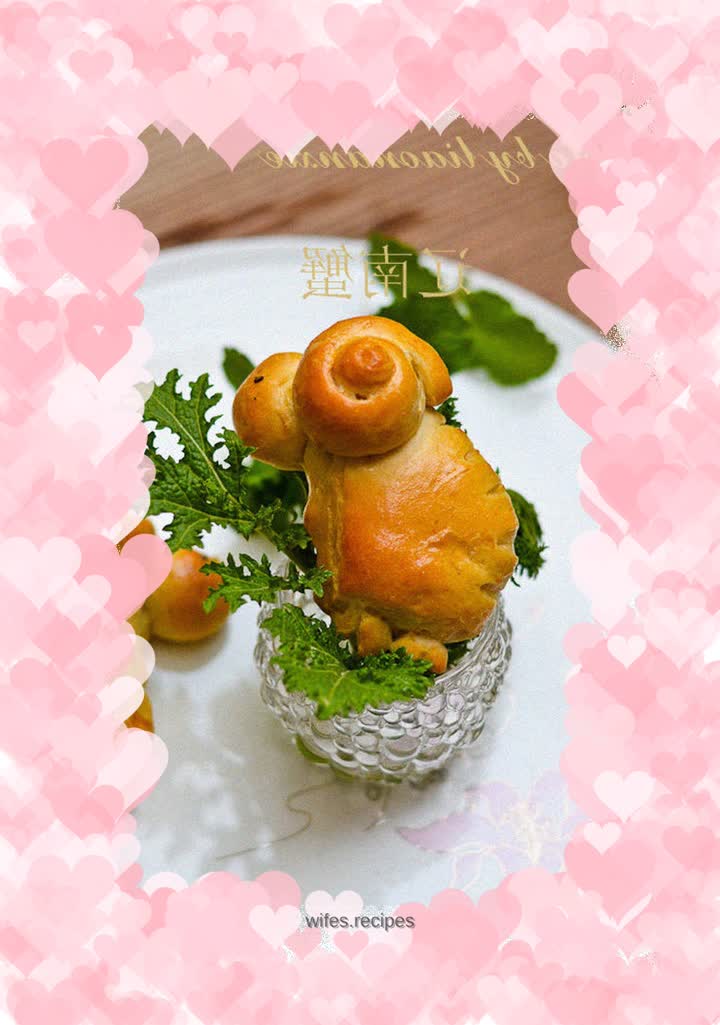
Overview
[Lamb Bread] Happy Sheep New Beginning On the first day of 2015, I accompanied Niuer to a painting class. The theme this time was hand-made sheep, when we went. The older children haven't finished it yet. The three-dimensional lamb looks very beautiful. Of course, Niu'er was attracted immediately. The arrangements for painting classes are always unexpected, and Niuer is always full of expectations. The children in the lower kindergarten class did not make three-dimensional lambs, but they also had to use shearing methods to cut out lambs. Painting teachers have unique insights into education. Of course, it is also particularly good to apply them to painting education. The children particularly like the teaching that is conducted according to the children's characteristics. The teacher first showed the children various pictures of sheep, asked the children to observe the characteristics of the sheep, and guided the children to observe and discover by themselves, which is great. Then, the teacher demonstrated how to cut out a lamb. It's that simple. During the making process, the teacher will give some guidance and tell the children what to do, and will never tell the children that this is not good or that is not good. The children drew sheep and sheared them very seriously according to their own understanding. Because children have different personalities and different understandings of sheep, they made various lambs. If you didn’t attend the class and just looked at the children’s paintings, you might not be able to tell that they were individual lambs. The children’s paintings are just like that. Just because we can't read doesn't mean our children are not doing well. When looking at children's paintings, you should consider the child's age and cognition. When the child was painting, Mima was sitting next to her, and suddenly she thought about delicious food. Can I make lamb bread? Art is Mima's shortcomings, let alone creation. However, after seeing the children's drawings, Mima really wanted to make lamb bread. It didn't matter what level she was at, she just had to make it if she thought of it! Even if it is the same as a child. Okay, let’s do it. Before doing it, I checked relevant blog posts and took pictures. As a result, hehe, I finally made lamb bread for the third time, give yourself some confidence and strength. After working hard three times, I finally made a slightly satisfactory sheep. I started to make a curly lamb, but the painting was too white, and the sheep didn't look like a sheep at all. I started to do the second method, trying to make a fat lamb, but because the operation method was wrong, the sheep was not fat enough to look like a sheep. In the end, I used this method, and it still has a little taste. Share it.
Tags
Ingredients
Steps
-
Add the other ingredients except butter into the bread bucket first in liquid form and then in powder form, and mix evenly.

-
Start the bread machine and knead the dough until it becomes stretchable.

-
Add butter and continue the dough mixing process.

-
Until the dough can be stretched.

-
Let the dough rise for 20 minutes.

-
Take out the risen dough and let it rest. Most bread needs to be divided and rounded before being rested.

-
Divide the relaxed dough into several large doughs, some medium doughs, and several small doughs. The large dough is about 40 grams, the medium dough is about the size of jujubes, and the small dough is about the size of peanuts. To be specific, it should be one large dough (the body parts of two sheep), two medium doughs, (the horn parts of the two sheep), four small doughs, (the limbs of the two sheep). There is no sheep head part prepared here, because a part of the large dough will be cut off later, just enough to make the head.

-
Roll the loose dough into a round shape, as shown in the picture, and cut off the part pressed by the dough pin.

-
Then divide it into two parts horizontally. This is the body part of the lamb. Divide the cut part into two parts and round it into a round shape to become the head of the lamb.

-
Shape the medium dough into a long strip.

-
Roll into horns.

-
Use a small amount of water to glue the heads and limbs of the limbs together.

-
Use scissors to cut the limbs and make a few cuts on the back.

-
In order to prevent sticking and make it easier to move, place the lamb on the oil paper. Do not put too much on one plate.

-
Put it in the oven for fermentation. This picture shows the lamb made for the first time. During fermentation, put a bowl of hot water to maintain humidity.

-
After the lamb is cooked, brush it with egg wash.

-
Put it in the oven again, 180 degrees for 15 minutes. 18. This is the last lamb made. Can you tell it’s a lamb? Hehe.
