Candied bergamot
Overview
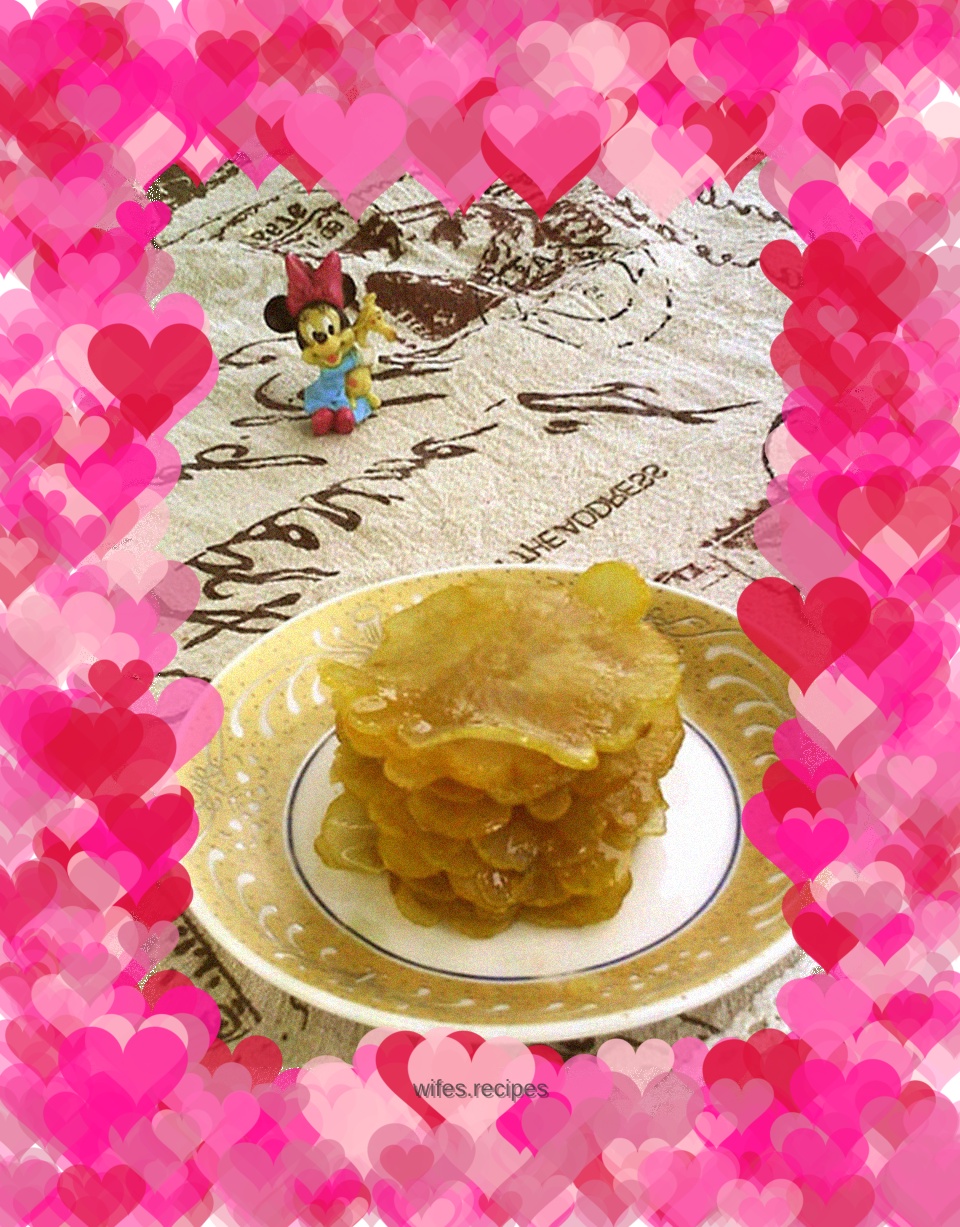
The fruit of Buddha's Hand has a strange shape, with a cracked top, split and curled like a fist or spread like a finger, which resembles the fingers of a Buddha statue, hence its name. Bergamot has a bright yellow color, a fragrant fragrance, and white flesh, but it tastes bitter and should not be eaten raw. Slice the bergamot and make tea. The fragrance is astonishing. Its taste is pungent, bitter, sour, and warm in nature. It can regulate qi and relieve pain, resolve phlegm and relieve cough, soothe the liver and stomach, strengthen the stomach and eliminate food, and is good at awakening the spleen and appetizing, and harmonizing the middle and regulating qi. Buddha's hand placed in the room can make the room fragrant. It is mostly made into tea or wine for drinking. Eating it directly is a real chore. However, once by chance, I discovered that Buddha's hand can actually be eaten this way. After candied and steamed, the white flesh becomes transparent. It is soft and glutinous when bitten in the mouth, and bursts of fragrance penetrate into every orifice. The fresh air is rising, and it is slightly bitter, very light. . .
Tags
Ingredients
Steps
-
Materials

-
Wash the bergamot with clean water and dry the surface moisture

-
cut into thin slices

-
Add 100 grams of sugar

-
Mix well

-
Sprinkle the remaining sugar over the surface, seal, and let sit for a few hours

-
The sugar melts and the juice gradually oozes out. Place it in the refrigerator overnight

-
Take it out the next day and the sugar will be completely dissolved

-
Pour into a porcelain bowl

-
Pour appropriate amount of water into the electric stew pot

-
Put it into a porcelain bowl and close the plate

-
Cover the lid of the stewpot, turn on the power, and simmer over low water for about 4 hours

-
The Buddha's hand becomes soft and transparent, turn off the heat

-
Serve and eat.
