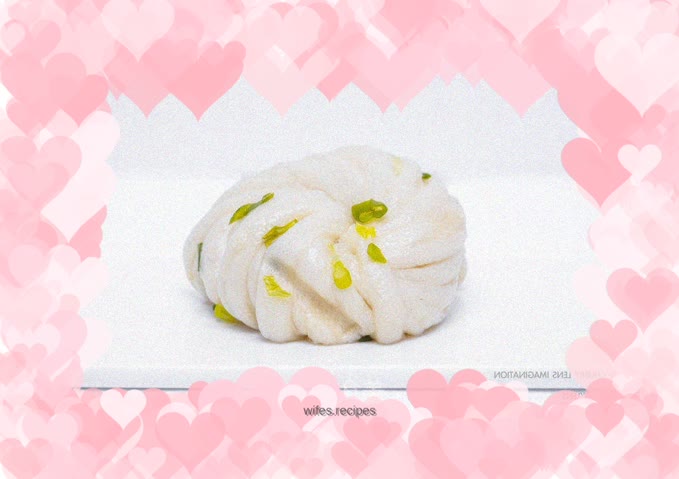
A hundred silk threads cannot be rolled: silver silk flower roll
Overview
For many traditional pasta dishes, the proportion of parents (those born in the 50s and 60s) who have mastered this skill is obviously much higher than the generation who teach cooking (those born in the 80s and 90s). But every time I want to ask for advice from people of the previous generation, I find a problem: it is difficult for anyone to systematically summarize the proportions of this dough. Therefore, it took me a week to teach cooking. Through repeated trials and proofreading, and repeatedly consulting my mother on the phone from overseas, I came up with the best proportion formula for baking dough: All-purpose flour, per 100 grams, salt, 0.25 teaspoons, yeast, 0.5 teaspoons, sugar, 15 grams ± 5 grams, water, 50 grams ± 5 grams (Note: Since the scale has low accuracy for weighing within 10 grams, I used teaspoons as the unit. If you have any questions about the specific conversion of teaspoons, please check the kitchen unit conversion in my official account. In addition, everyone has different acceptance of sweetness, and the water absorption of each brand of flour will vary, so I have reserved a buffer of 5 grams (per 100 grams) in the ratio.) Many friends suggested that I record videos in the WeChat backend, so this time I used the GIF recording technology for the first time to introduce some important steps to you more intuitively.
Tags
Ingredients
Steps
-
Mix half a teaspoon of salt into the weighed flour.

-
Avoid: direct contact with salt and yeast

-
Pour the sugar into 100 grams of water and mix well.

-
Add yeast

-
Stir evenly until some bubbles appear on the surface. In addition, if the room is cold in winter, it is recommended to heat the water/milk to 35-45 degrees in advance.

-
Pour the liquid into the flour and use chopsticks to mix the dough and liquid first. If the sides of the container are coated with flour, use a spatula to scrape the flour into the dough.

-
Slightly condense into a ball. Note: There is no need to worry too much about the scattered flour at the bottom of the container, as long as most of it sticks to the dough.

-
You can close the lid and proceed with the first round of fermentation, which will take about 30 minutes (at 20 degrees Celsius).

-
This is the state after the first fermentation.

-
Transfer the dough and any flour scattered at the bottom of the container to the counter. Prepare half a cup of flour and we can start kneading the dough.

-
(GIF animation) At the beginning when the dough is still sticky, it is best to operate it with one hand. The purpose of kneading is to make the dough chewy and to let the scattered flour into the main dough.

-
(GIF animation) Later, when the dough is no longer sticky, you can use your other hand to assist in kneading the dough more efficiently. The whole kneading process takes about 10 minutes.

-
Shape the kneaded dough into a dough, cover it with a damp cloth/large bowl, and ferment for the second time.

-
It takes about 1 hour to ferment to 1.5-2 times the size.

-
Squeeze the air out of the dough.

-
Sprinkle a little bit of flour on the surface of the dough

-
Then roll the dough evenly into a rectangular sheet about 35x25 cm.

-
Cut 2 green onions into small pieces, marinate them with half a teaspoon of sea salt, squeeze out the excess water, and pour in 2 teaspoons of raw oil.

-
Spread the pickled scallions and oil evenly on the dough

-
Then fold the wide side into 3 pleats.

-
Then cut into thin strips with a knife. If you are making 6 pieces of scrolls, you can cut them 5 mm wide. If you are making 5 pieces, you can cut them 3-4 mm wide.

-
Take every 5 strips as a group, then put the 2 groups together in an upper and lower form, slightly stretch the combination towards both ends, then twist it into a twist shape, and then wrap it in a knotted form.

-
One animated picture is worth ten thousand words. If the animated picture cannot be played normally, please pay attention to the article chubbylens in the official account

-
Transfer the prepared flower rolls to the steamer, cover with the lid for the third fermentation. Note: The kitchen paper (KitchenTowel) or gauze padded at the bottom of the cage must be completely soaked, completely soaked, completely soaked, so that the flower rolls will not stick to it.

-
It will take about 30-40 minutes (the water in the steamer is warm water) to ferment to 1.5-2 times in size. Then you can steam it for 15 minutes, then turn off the heat and simmer for 5 minutes, then open the lid and take out the flower rolls.

-
Finally let's take a look at the finished product.

-
Welcome to scan the QR code.
