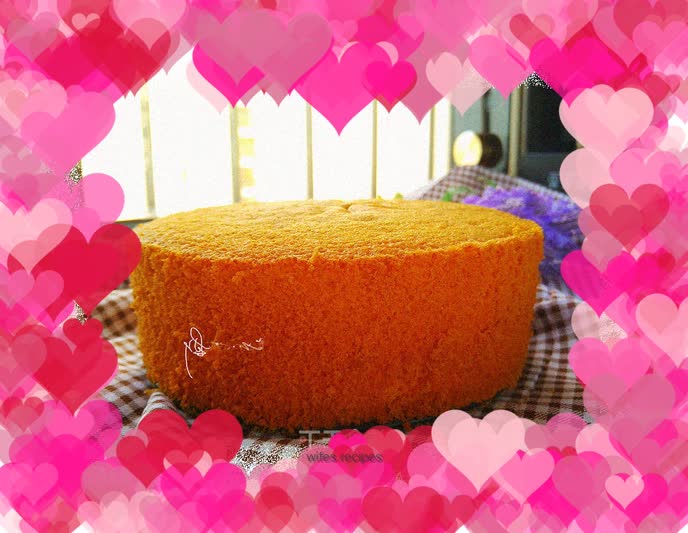
Classic French sponge cake
Overview
There will always be times of failure in life. How can you know how difficult it is to succeed if you have never failed! Life is like this, and baking is even more like this! Of course, maybe some people are smarter and can get through it with just a few clicks and avoid a lot of detours, while stupid people will always succeed slower, just like me! After so many failures, I am not willing to change the formula or materials. I fight hard for a classic, and refuse to admit defeat because others can do it but I cannot. I am so stubborn and determined! The result is not perfect, but it can be regarded as finding the reason for my failure. Using the wrong flour and uneven mixing are the main reasons
Tags
Ingredients
Steps
-
The ingredients for sponge cake are very simple, which are eggs, low-gluten flour, fine sugar and butter. This recipe is for a 6-inch portion. The ratio of eggs, sugar and flour is 1:0.5-0.6:0.5-0.6,

-
The tools needed are a whisk, two whisk basins, a silicone spatula, a flour sifter, an egg beater, a 6-inch cake mold and a pot of hot water

-
Sift the low-gluten flour twice in advance to prevent the flour from clumping

-
Melt the butter in hot water of about 70 to 80 degrees Celsius and turn it into a liquid for later use. No cooling is required

-
Make sure there is no oil or water in the egg-beating basin, beat in the eggs, and pour in the fine sugar all at once

-
Beat the eggs with an egg beater and stir until the fine sugar cannot be seen anymore,

-
Take a smaller egg-beating basin and fill half of it with hot water of about 50-60 degrees

-
Place the egg-beating basin filled with egg liquid over the hot water

-
First stir the egg liquid at low speed to raise the temperature to 36-40 degrees, which is the temperature when the egg liquid is warm to the touch with your fingers, then beat the egg liquid at high speed

-
Whisk the egg liquid until it swells in volume and becomes milky white. When you lift the whisk, the lines of the egg paste will not disappear immediately. The egg liquid is almost ready. It will take about 6-10 minutes. However, there are still unevenly sized bubbles in the egg paste, so continue mixing at low speed for 1-2 minutes

-
The beaten egg batter has even bubbles and a smooth and delicate surface. The lines of the egg batter that are lowered by lifting the whisk will not disappear immediately. You can also verify that it does not fall over by inserting a toothpick 1.5cm into the egg batter

-
Sift low-gluten flour into the beaten egg batter all at once or in 2 to 3 batches

-
Use a spatula to scrape across the basin from the 2 o'clock direction to the 8 o'clock direction, flip it up from the 9 o'clock position, and turn the mixing bowl while stirring until the flour is completely mixed. It is better that no dry flour can be seen every time you scrape the egg batter. Be gentle when stirring

-
Pour the butter from the spatula and spread it over the egg batter. Do not pour it directly into the egg batter, otherwise the butter will be concentrated in one place and cause the egg batter to defoam

-
Stir the butter evenly until no trace of oil can be seen. The mixed cake batter will be fine, smooth and milky white. If the final batter is yellow in color and bubbles keep popping up, it means it has been defoamed

-
Pour the cake batter into the mold, lift the mold and shake it a few times to eliminate large air bubbles (you don’t need to get the remaining egg batter on the spatula, because there will be more yellow egg batter and it will sink to the bottom)

-
Bake in the preheated oven at 160 for 30-35 minutes

-
Bake for 20 minutes

-
After the baked cake comes out of the oven, shake it a few times to shake out the water vapor in the cake

-
Then immediately reverse

-
After cooling, use a demoulding knife to remove the mold
