Cold pitaya peel
Overview
My sister asked me if I knew that dragon fruit peel contains anthocyanins, and that some people make pitaya peel into salad dressing. I said that I knew anthocyanins. Both blue plums and wolfberry contain anthocyanins, especially wild black wolfberry. But Shiranaya peel also contains it. I happened to buy dragon fruit, so I tried making the pitaya peel into a salad. Anthocyanins are a powerful antioxidant, more than 10 times stronger than carotene, and can retain activity in human blood for 75 hours. It protects the human body from damage caused by harmful substances - free radicals, and helps prevent a variety of free radical-related diseases. Anthocyanins can enhance the elasticity of blood vessels, protect the inner walls of arteries, lower blood pressure, inhibit inflammation and allergies, improve joint flexibility, promote the regeneration of rhodopsin in retinal cells, improve vision, and also have anti-radiation effects. In short, anthocyanins maintain human health in many aspects and bring us a variety of benefits. Therefore, when eating dragon fruit, try not to discard the inner pink peel. You can scrape it off with a knife and eat it raw, or cut it into thin strips and eat it as juice. It should be reminded that dragon fruit peels are not suitable for making tea, boiling soup, or steaming and frying, because high temperatures will cause partial degradation of anthocyanins and reduce their nutritional value.
Tags
Ingredients
Steps
-
Peel off the outermost layer of dragon fruit skin.

-
Cut the peeled dragon fruit into shreds.

-
Boil a pot of water. After the water boils, pour the dragon fruit peel into the water and blanch it for about a minute.

-
After blanching, pick it up through a sieve and drain the water.

-
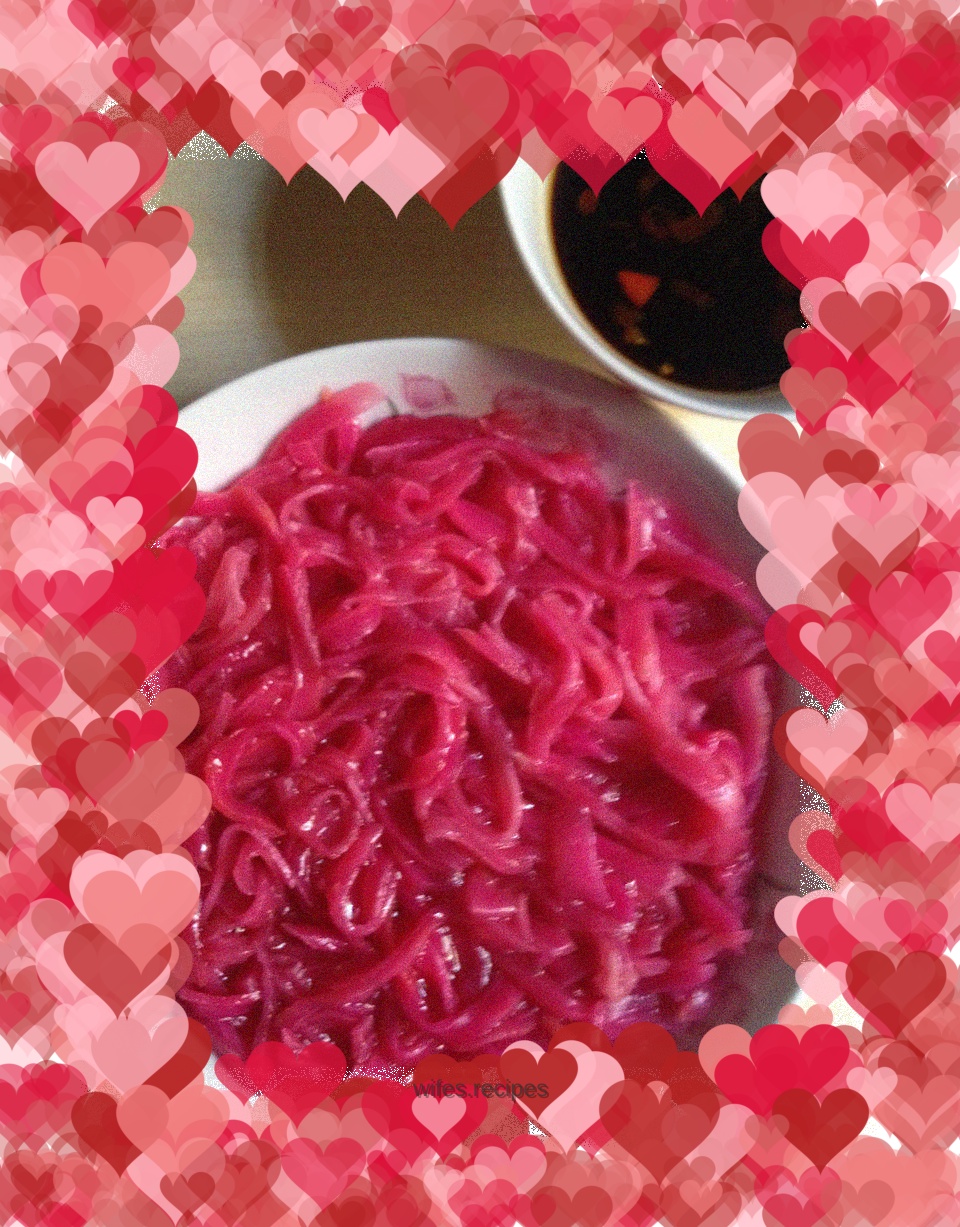
After cooling, add honey and mix well. Or make a cold sauce according to your preference and mix well. There is only honey in the plate, and the black bowl is the prepared cold sauce.
