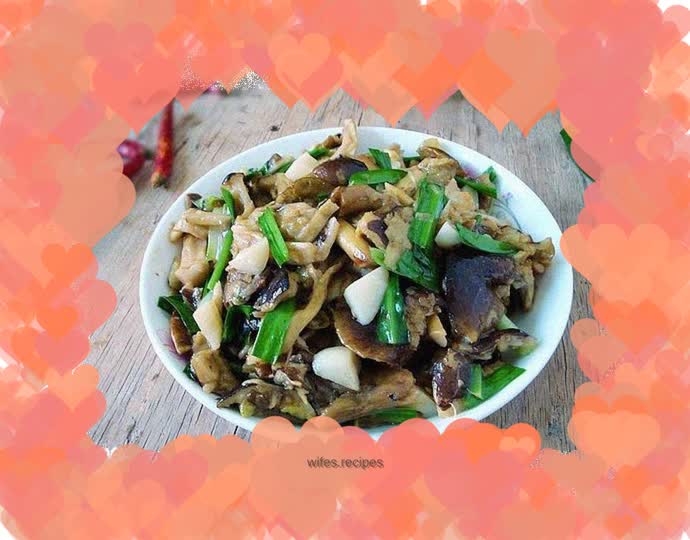
Stir-fried pineapple leaves with kohlrabi leaves
Overview
I am both afraid and in love with wild mushrooms. How can I not love wild mushrooms for their rich nutrition and delicious taste? However, incidents of wild mushroom poisoning occur every year due to improper consumption, which makes people scared just thinking about it. Yunnan is a plant kingdom with rich forest resources, and a large number of wild fungi are unearthed every rainy season. However, I only eat two or three varieties of wild fungi. The poisoning incident made me afraid to try new varieties. I was introduced to this kind of pine fungus by a colleague three years ago. One day, I met a colleague on the street and saw her buying a lot of pine fungus. I asked her why she bought so many. She said that this fungus has the effect of treating breast hyperplasia, and she bought so many to dry it in the sun to cure the disease. I didn't believe it. It happened that my chest hurt due to breast hyperplasia. She asked me to buy some to try. So I bought some for 5 yuan and took it home to eat. The next day after taking it, I found that the breast hyperplasia that had been painful for a long time was no longer painful. I continued to eat it a few times and the annoying breast hyperplasia no longer recurred. From then on, every time when this kind of pine hair fungus was on the market, I would buy it and eat it several times, buy some and dry it, and eat it once or twice a month as a food to prevent breast hyperplasia. Personally, I don’t think you need too many condiments to eat mushrooms, just some oil, some garlic, and a little chili. Of course, it will taste better if you add some kohlrabi leaves. Pu’er people have always believed that kohlrabi leaves and mushrooms are the best partners. Kohlrabi is also known as large kohlrabi and wild leek. It looks like a garlic sprout, and its leaves, stems, flowers, and roots are all edible. Wild leeks taste like leeks. But it is fatter, tenderer and more fragrant than leeks. The root of wild leek, also known as kohlrabi root, is an indispensable ingredient in making various ethnic dishes in Yunnan.
Tags
Ingredients
Steps
-
The pine fungus is washed with sediment, dried, and then torn into several pieces by hand.

-
Peel and cut the garlic into small pieces, cut the green rice into small sections, wash and cut the kohlrabi leaves into sections.

-
Heat up the wok, pour in oil and heat, add half of the garlic and fry until brown, until the aroma and garlic oil come out.

-
Pour in the pine mushrooms and stir-fry.

-
Wild mushrooms in the rainy season contain a lot of water, so stir-fry the wild mushrooms for a while until the juice is cooked.

-
When the wild mushrooms are almost gone, add the remaining garlic and stir-fry until the juice is gone.

-
Add appropriate amount of salt and stir-fry evenly.

-
Add the chopped kohlrabi leaves and stir-fry evenly.
