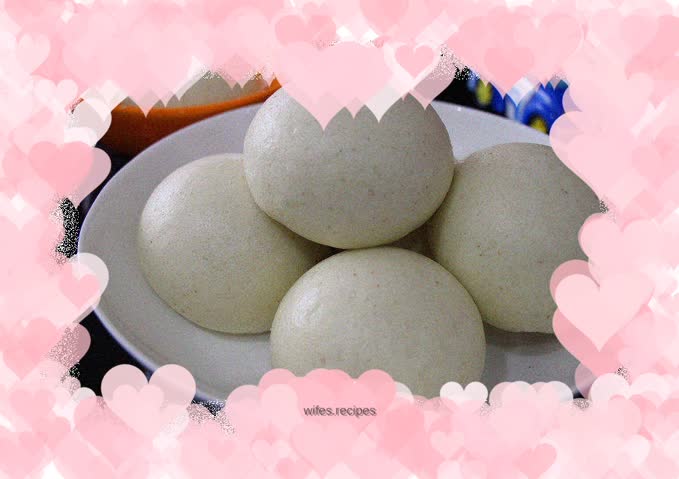
Make buckwheat steamed buns from coarse grains
Overview
Buckwheat originated in China, with a long history of cultivation and rich planting experience. The earliest physical buckwheat was unearthed from Han Tomb No. 4 in Yangjiawan, Xianyang, Shaanxi Province, more than 2,000 years ago. The gluten content of buckwheat is very low, and the main protein is globulin. The essential amino acids contained in buckwheat are high in lysine and low in methionine, an amino acid pattern that can complement those of major cereals (such as wheat, corn, and rice, which are low in lysine). The carbohydrates in buckwheat are mainly starch. Because the particles are smaller, they are easier to cook, easier to digest, and easier to process than other cereals. Buckwheat is rich in dietary fiber, 10 times that of ordinary refined rice. Buckwheat also contains more trace elements such as iron, manganese and zinc than ordinary cereals. B vitamins, vitamin E, chromium, phosphorus, calcium, iron, lysine, amino acids, fatty acids, linoleic acid, niacin, niacin, rutin, etc. Buckwheat has a rough texture and is a typical whole grain. It is definitely hard to swallow when eaten alone. I bought freshly ground buckwheat flour. This is the best for children to regulate the spleen and stomach and eliminate food accumulation. Mix it with flour and use milk instead of water. It neutralizes the rough taste of buckwheat and is full of buckwheat aroma
Tags
Ingredients
Steps
-
Add all the ingredients except milk, salt, sugar, and yeast powder to the flour so that they do not touch each other

-
Add milk and stir gently with chopsticks until fluffy

-
Knead the dough into a smooth and non-sticky dough. Failure to knead the dough properly will directly affect the softness of the steamed buns

-
Cover with plastic wrap and place in a warm place to ferment. It takes about 3 to 5 hours in winter and half an hour to an hour in summer. Today the temperature is 25 degrees and fermentation took about two hours

-
The fermented dough has fine honeycombs and good organization inside. Whether the fermentation is successful will directly affect the softness of the steamed buns. In cold weather in winter, you can try various methods such as turning on the air conditioner, heating, covering yourself in a warm bed, etc.

-
Reshape the dough and deflate it. If it sticks to your hands, sprinkle it with flour and make it stick again. Sprinkle flour again, knead into a long and even strip, and divide into small portions of the same size

-
Use the end of your palm to knead each small dough while rotating the dough, and shape it into a round shape

-
Cover with plastic wrap again in a warm place and ferment for half an hour. You can also cover with a soft cloth to prevent the surface of the steamed buns from drying out, otherwise the finished product will crack and the skin will dry out

-
When the secondary fermentation is about to be completed, boil the water in the pot, put the steamed buns into the steamer and wait for the water to boil before steaming them in the pot

-
When the water is boiling, open the steamer and steam over medium-high heat for about 10 minutes, depending on the size of the steamed buns you make

-
When the time is up, turn off the heat, don't take out the steamed buns in a hurry, don't open the lid, let it simmer for two or three minutes before opening it

-
Finished product

-
Finished product
