Carrot and Egg Steamed Buns
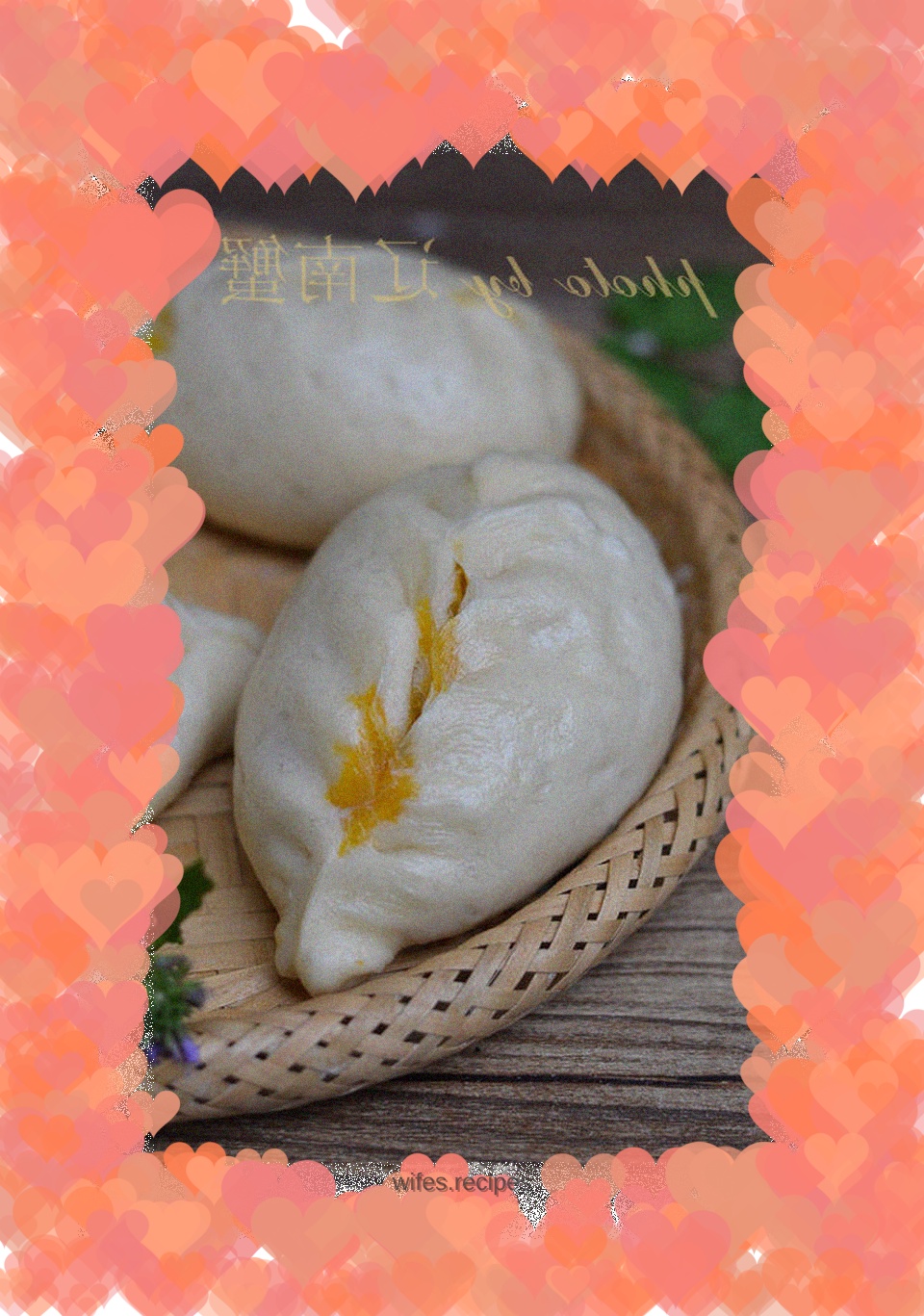
Overview
Steamed buns and steamed buns have been used as Chinese pasta since ancient times. I have been making steamed buns since I was very young. But later I discovered that I just know how to steam it, and I haven’t mastered the key points of steaming steamed buns well. To this day, I still only know how to steam it. Regarding skills and high level, there is really a lot of room for growth. Some time ago, I met a professional steamed bun aunt and asked her about some knowledge about steamed buns. I chatted a lot with the aunt and finally summarized two key points that I didn’t pay much attention to before: the degree of kneading and the degree of proofing. Auntie said that to make large batches of steamed buns, in addition to using a large dough mixer, they also use a dough press. The mixed dough needs to be pressed many times before it starts to rise. After the dough is pressed repeatedly and then fully proofed, the steamed buns will be very soft and have a good texture. In other words, I usually don’t knead the dough properly or wake it up properly, or because I don’t knead the dough properly, even if it wakes up properly, the steamed buns are not good enough. Either the surface is not shiny and the texture is not good, or the texture is too loose and chewy. I found the reason, but I still can't do it very well. Because of the persistent pain in my arms, kneading the dough is often a headache. Sometimes it’s a bit fussy, and I use a bread machine to knead the dough when making bread. I rarely think about using a bread machine to knead steamed buns. Even if I use it, I don’t know exactly how to knead it. I just follow my old idea and make it into a smoother dough. Actually that is wrong. The ACA fruit wood kiln bread machine has a preset bun dough program, so naturally I have to use it. Crust: 400 grams of plain flour, 210 grams of water, 5 grams of yeast. Fillings: carrots, eggs, chives and coriander. Seasoning: cooking oil and salt. Method:
Tags
Ingredients
Steps
-
Add the bun skin material into the bread machine bucket and start the bun dough.

-
While making the noodles, you can prepare the fillings, one and a half carrots, three eggs, and a handful of green onions and coriander.

-
Use a vegetable plane to grate the carrots into thin strips. If you don't have such a fine plane, you can grate first and then chop.

-
Fry the eggs into pieces. After beating the eggs, add a little bit of water. The eggs can be fried very tender. Add more oil when frying the eggs. This oil will be used to mix the fillings.

-
Add the scrambled eggs to the chopped carrots and top with the chopped green onions and coriander.

-
Add salt and mix well. Only oil and salt are used here. Carrots and eggs are extremely delicious ingredients and don’t require much seasoning.

-
The dough program is over, or the dough has risen by visual inspection. This can be seen by looking at the large volume. The volume of the risen dough will be more than twice as large. Depending on the season, it is decided whether to use the fermentation function of the bread machine. You can not use it when the temperature is high, but you need to use it when the temperature is low.

-
Deflate the risen dough and divide it into pieces.

-
Shape and roll into bun skin.

-
Wrap the buns according to your own wrapping method.

-
Place it in a cage for secondary proofing, and place it in a warm place. You can proof it on an insulated pot, in an oven, or by a heater. The cage grid can be covered with cage cloth, brushed with oil, or covered with vegetable leaves, etc. After the second proofing, put it in a basket and steam it. After the water boils, time it and it will be ready in 20 minutes.
