Chiffon cake
Overview
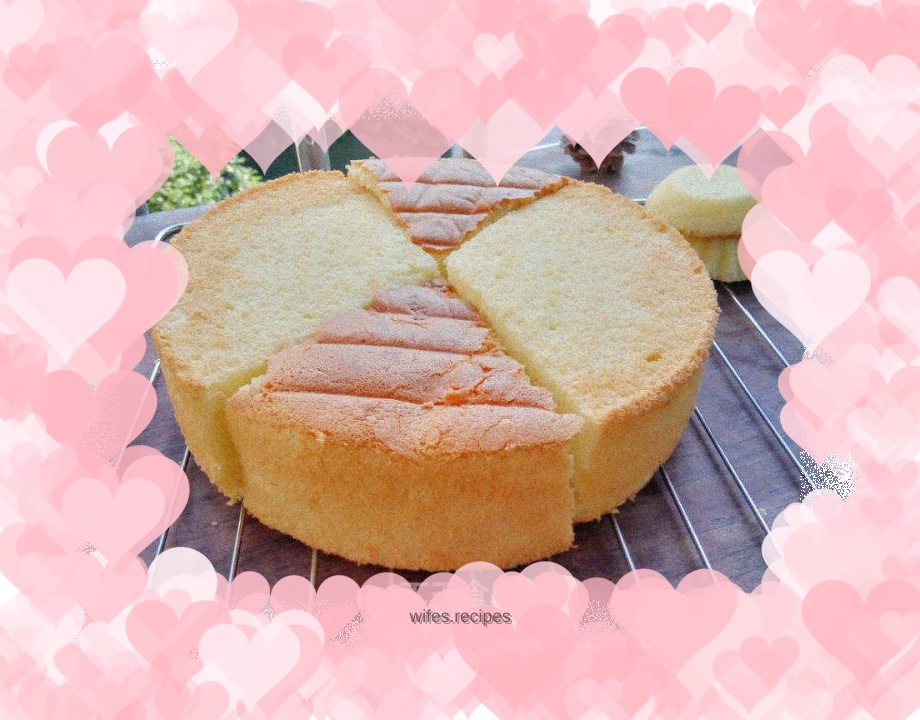
I always failed to make chiffon cakes before, but now I know that it is not difficult to make chiffon cakes. After many failures, I learned from my predecessors. Finally one day, a food expert told me a secret. She said that novices are not afraid. If you want to make a chiffon cake, you can watch Tianyue's chiffon video and listen to the food expert's advice. I searched for the video, started watching it, and tried to do it once, but I still couldn't remember the process and messed up the order of the process, but the result was still better than what I had done before. Then I watched the video several times, and I did it three times in a row that day, and it was better each time. Only then did I master the trick, and I felt so happy! I’m so grateful for that food guru! Then I did it again, and this time it was much more successful than the previous times. For me, it was already very good. The eight-inch chiffon cake I made was not stepped on or waisted, and the cake was very soft. After pouring the remaining cake batter into the mold, I made several small cakes, which were also very soft.
Tags
Ingredients
Steps
-
Prepare all the materials and weigh them with an electronic scale.

-
Separate the egg whites and egg yolks into two stainless steel basins, making sure there is no egg yolk in the egg whites. (All tools and basins must be clean, water-free, and oil-free)

-
Pour the milk and oil into the egg yolk bowl and shake gently a few times to coat the egg yolk with the milk and oil.

-
At this time, start beating the egg whites. Use the electric egg beater at low speed to spread the egg whites.

-
Then beat at high speed until the egg whites can form small peaks, then add one-third of the white sugar.

-
Continue to beat at high speed until the egg whites have resistance and form peaks, then add one-half of the white sugar.

-
Use a spatula to scrape the uneven splashes of meringue on the edges, and then stir the egg whites vertically at low speed. This is to allow the meringues to form uniform small bubbles and suck away the large bubbles to see if the meringues are delicate and shiny. Let the beaten meringue rest for two to three minutes.

-
Sift low-refined flour into the egg yolks.

-
Use a hand mixer to stir the ingredients evenly until the batter becomes sticky.

-
Now it’s time to check the meringue. Use a manual egg beater to stir up a lump of meringue to see if the bubbles on the surface and inside are even. The best state is the same as before it rests. Then use a manual egg beater to stir a few times and the egg whites are ready to use. (If the meringue is dry and rough after standing, and the problem is not serious, then use a manual egg beater to beat it for a while to restore it to a uniform and delicate state, and then the meringue can be used.)

-
Divide one-third of the egg whites into the egg yolk batter and mix evenly using the stirring technique.

-
Then pour the mixed batter into the remaining egg whites, and still use the stirring technique to mix the batter evenly.

-
Then pour the batter into the mold to a height of about 15 cm, slowly pour it in, and then shake out large bubbles. You can use a toothpick to pop the bubbles on the surface, or you can make circles.

-
Then put it in the preheated oven at 160 degrees and bake on the middle and lower racks for 35 minutes.

-
The baked chiffon cake needs to be dropped from a height of 15 cm. Just drop it twice. Then turn it upside down and let it cool before removing it from the mold. A chiffon cake is ready.

-
The color is just right.

-
The cake is also very fluffy.
