Roujiamo (super detailed version)
Overview
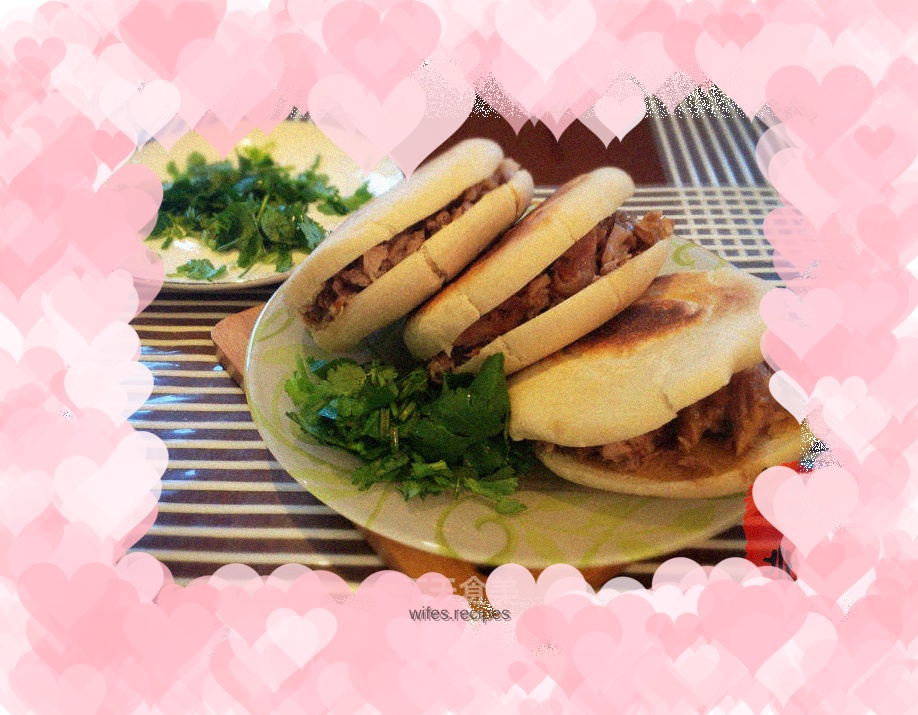
Before high school, there was no such thing in Inner Mongolia. Later, when I went to Tianjin to study at university, I had Baiji steamed bun stuffed with cured meat. I don’t know which of the two names is more authentic. It seems that people in Shaanxi call it Roujiamo, and we also call it Roujiamo. I have made Roujiamo twice before, but neither of them was very successful because the meat was braised pork and the bun was made from dough, which looked similar but didn't taste right. It's delicious, but not like Roujiamo. . . A few days ago, a Shaanxi restaurant opened near my home. The meat buns were pretty good. I bought them twice. While I was waiting for the buns, I peeked at the Shaanxi boy making the buns and chatted with the girl making the meat buns. I secretly learned some tricks. I don’t have any previous failure experience and I don’t know what to learn. When I tried it this time, it was really powerful, but it was different. I dare not say it is authentic, but it is definitely delicious. My picky wife also said it was a great success. Speaking of authenticity. I think it's a relative concept. I've seen people in Shijiazhuang say that the donkey fire in Beijing is not authentic, and classmates in Handan say that the donkey fire in Shijiazhuang is not authentic. Which one is authentic seems to be a matter of opinion, just like every Tianjin person will say that their own lo mein is delicious. Taste is not objective. Time, memory, family affection, friendship, and love are all involved. So don’t worry about whether it’s authentic or not, delicious is the key. I don’t know the specific method of making the cured meat in Roujiamo. My understanding is that it is sauced meat. I used sauce elbow. Who told me that the elbow here is cheap? It’s one-third cheaper than pork belly. If you don’t buy it, I’ll be sorry for this beautiful elbow.
Tags
Ingredients
Steps
-
Take two tablespoons of dry yellow sauce, add water, mix well with your hands, and let it sit. Wash the elbows and burn them on the fire if there are any hairs on them. The elbow was difficult to stew, so I put it in the electric pressure cooker and went through the "meat and tendons" process. After deflating the air, I took it out and found that it was far from cooked inside. It was just right. It was too cooked and not tasty.

-
Deboning. Then make a few cuts without cutting off the skin.

-
Get some of the various spices you have at home and grind them in a food processor. Put it into the old stewed soup and cook over low heat. Cook for an hour. It would be better to cook it longer. Then filter it. Braised soup is just fine. Everything braised is delicious. I used to braise beef in soy sauce, but this is my first time braised pork. Don’t be afraid of the odor. The more types of brine, the more fragrant it will be. At this time, it depends on whether you have time. If you have time, let the stewed soup cool and put the meat in to soak overnight. If you don’t have time, you can stew the meat. I stayed overnight. When starting to cook, add ginger, green onions, sugar (rock sugar is better), cooking wine, and salt to taste. Make it salty. Pour the clear soup on top of the dry yellow sauce that has rested, leaving out the turbid bottom. I think I like to add dark soy sauce for coloring, but I don’t like the color being too dark, so I don’t add dark soy sauce. Start simmering over low heat. It will take at least 2 hours for the pork to be cooked properly.

-
When stewing the meat, knead the noodles and dissolve the yeast in warm water. I am used to adding some sugar, but you can skip it. Beat the flour into water and add a little alkaline flour. The noodles should be softer than steamed bun noodles. Adding some alkaline noodles will make the noodles crispier, not softer.

-
Then cover with wet cloth.

-
Here are the key points of stealing lessons. The noodles cannot rise! At that time, I asked the girl whether this steamed bun was fermented or dead. "It's about making noodles." Then why is this noodle not noisy? "There's no need to make it." You see, I used to ferment it twice according to the method of making steamed buns, which was naturally unreliable. I posted for half an hour. It’s a little bit bigger, it depends on the amount of yeast you use and the temperature

-
Below is the Shaanxi guy’s method of making steamed buns. Roll out into a long piece and fold in half.

-
Roll it out again and roll it up

-
Press flat. Use a hammer to roll into small bowls. I don't have a rolling hammer, so I use the head of a rolling pin, and the effect is the same.

-
The "bowl" faces upward. Dry bake until both sides are lightly browned. It would be best to have that kind of spiral pattern

-
The sauced pork is almost ready. This is the soy sauce-free version. It tastes very fragrant. The fat meat is already trembling. Cut it into pieces and chop it several times. If you add it to the steamed bun, it will be 0k

-
Actually, you don’t need to add coriander. The reason why coriander is added outside is probably because the meat is very fatty, not stewed thoroughly enough, and is not necessarily very hot, so coriander and green pepper are used to relieve the greasiness. Mine is super delicious without the coriander.
