Oily vegetable moss
Overview
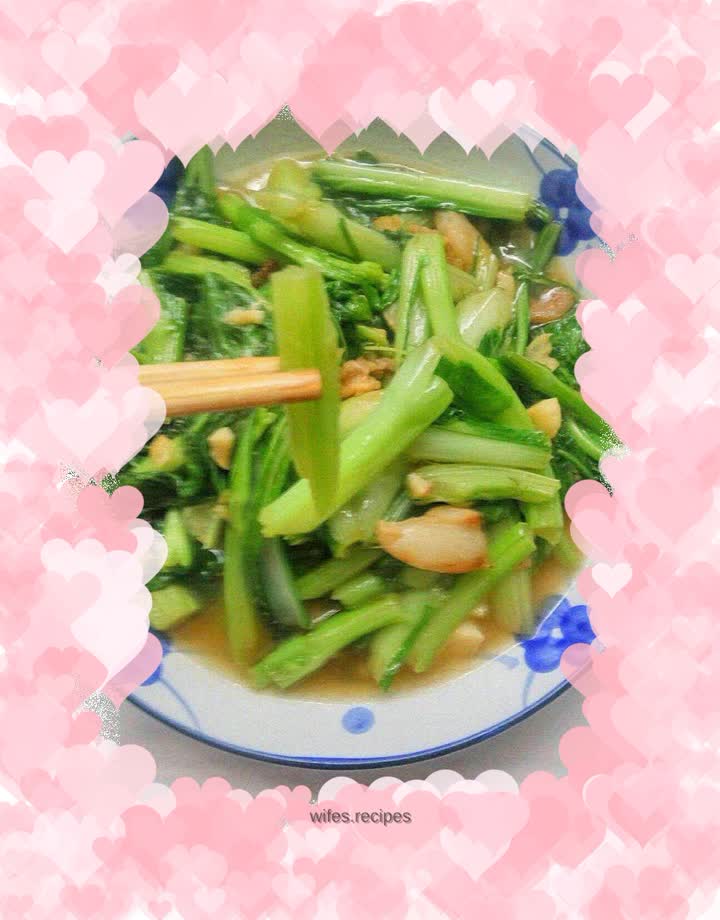
Green cabbage moss is the most common early spring vegetable in the south. However, thanks to the adoption of greenhouse technology, it seems that off-season vegetables can now be eaten all year round. It is green, oily, and very tender, and the buds taste a bit like broccoli, not at all the old and raw material you imagined. Today I would like to introduce to you a vegetable dish with oil residue, which is fresh and delicious!
Tags
Ingredients
Steps
-
Prepare ingredients.

-
Prepare a little fat and oil residue.

-
Remove the yellow rotten leaves and tear off the outer skin of the green vegetable moss. Clean and set aside.

-
Chop the garlic into granules.

-
Heat the pan over medium heat, pour in the oil residue and garlic, and sauté until fragrant.

-
Turn up the heat, add the green vegetables, and stir-fry evenly.

-
Add a small spoonful of table salt.

-
Pour in appropriate amount of oyster sauce and continue to stir-fry.

-
It’s out of the pot!

-
The green vegetable moss is so fresh and tender, come and try it!
