Croissant
Overview
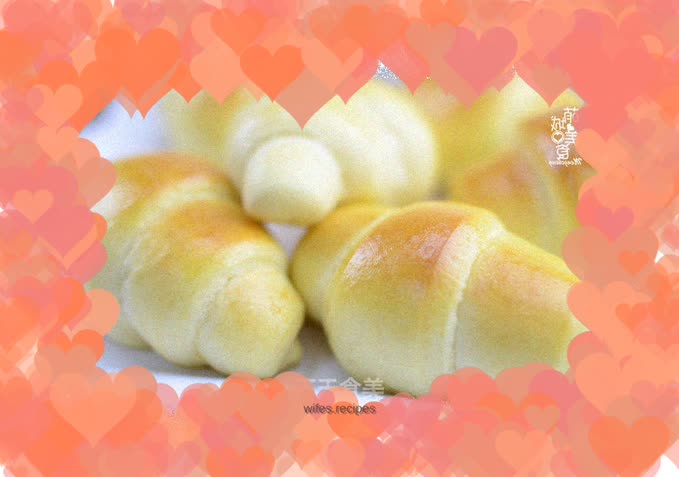
I have been learning baking for a while. After mastering certain skills, I always want to do something new, such as adding some fuss to the shape of the finished product. I saw croissants made by others online and thought they were quite interesting. Are they cute? So I tried to do it myself. What people generally call croissants is puff pastry, but the ones I made were not puffed up, for two reasons. First, people who are interested in baking probably have this feeling - making bread is more difficult than making cakes and cookies. Among breads, puff pastry is undoubtedly the most difficult to make. Secondly, special shortening or margarine must be added during the production process of shortening bread (if butter is used, the shortening effect will not be good). Both shortening and margarine contain trans fatty acids. Trans fatty acids are very harmful to the human body, and long-term intake can easily induce cardiovascular disease, diabetes, and cancer. To take a step back, even if you make some sacrifices in terms of taste and use butter instead of shortening, more fat can easily lead to obesity. Although the non-flaky croissant does not have a crispy texture, it still tastes pretty good. Looks good, tastes good, and is healthy, aren’t they the way we pursue our diet?
Tags
Ingredients
Steps
-
Put the sugar, eggs, and water into a container and mix well.

-
Add flour, yeast, and milk powder, mix into a dough, and knead until the surface is smooth.

-
Add the softened butter and knead again until the dough has a smooth surface.

-
Place the kneaded dough in the refrigerator to rest for 10 minutes.

-
Use a rolling pin to roll the dough into a uniform thickness and fold it in half 4 times.

-
Cover with plastic wrap or a damp cloth and bake for 10 minutes.

-
Roll out the flat piece, cut off the corners, and cut into isosceles triangles.

-
Roll up the triangular dough from the bottom edge into a horn shape.

-
Arrange the shaped bread neatly in the baking pan, put it in the oven, turn to the fermentation setting, and ferment until it is 1.5 times its original volume.

-
Take out the fermented bread and brush the surface with egg wash.

-
Bake in the preheated oven at 160 degrees for upper heat and 130 degrees for lower heat (place on the second to last layer), bake for 15 minutes until the surface is colored.
