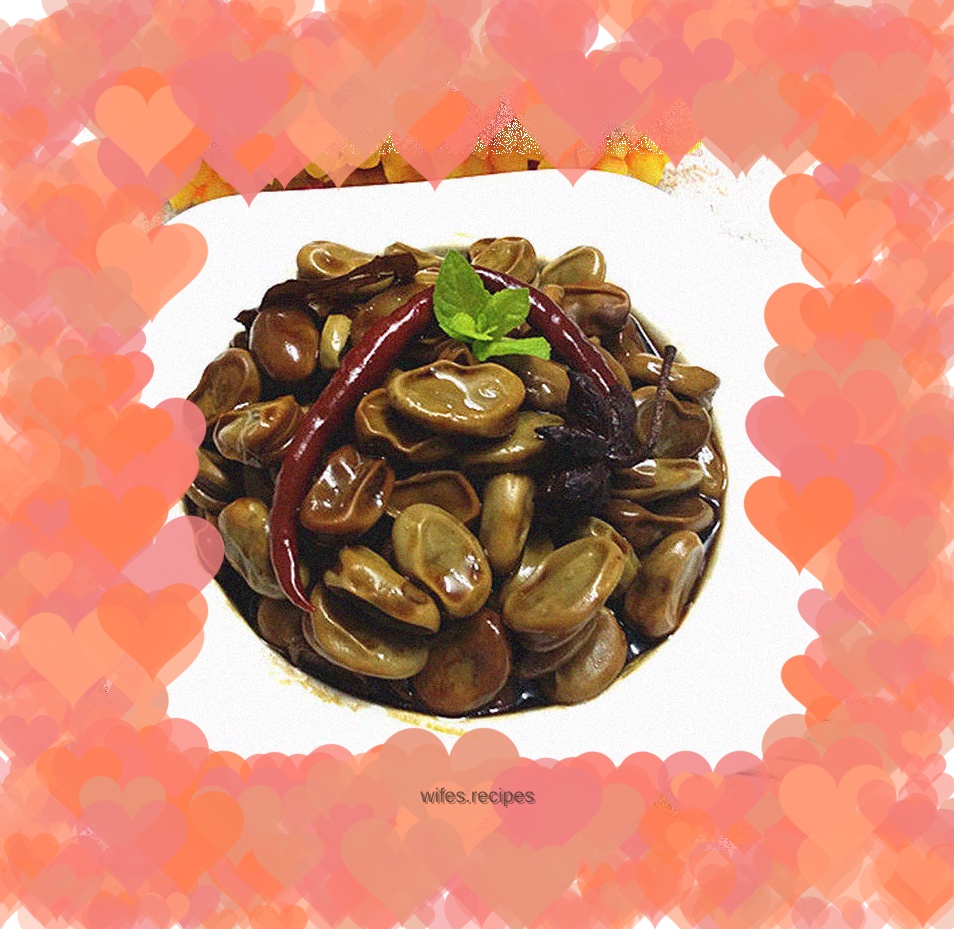
Braised spiced broad beans
Overview
Broad bean (Latin: Viciafaba L.), also known as Luohan bean, Hu bean, southern bean, vertical bean, Buddha bean, is an annual herb of Fabaceae and field pea. It is a dual-purpose crop for grain, vegetables, feed, and green manure. It is native to the Mediterranean coast of Europe, from southwest Asia to North Africa. It is said that Zhang Qian of the Western Han Dynasty introduced it to the Central Plains from the Western Regions. Broad beans are rich in nutritional value and contain 8 essential amino acids. The carbohydrate content is 47% to 60%. It is edible and can also be used as feed, green manure and nectar plant cultivation. It is a dual-purpose crop for grain, vegetables, feed, and green manure. The term broad bean first appeared in the poem preface of Yang Wanli (1124-1206) in the Southern Song Dynasty. Chinese broad beans are said to have been introduced from the Western Regions by Zhang Qian of the Western Han Dynasty. It is cultivated from the tropics to 63° north latitude. In China, Sichuan has the largest number, followed by Yunnan, Hunan, Hubei, Jiangsu, Zhejiang, Qinghai and other provinces. People from the Jiangnan area like to eat beans during the Beginning of Summer, so they are also called Beans in Beginning of Summer. People in Ningbo are accustomed to calling them Japanese beans, and around the beginning of summer, almost every household eats broad beans and likes to eat broad beans. Many people also cook broad beans with rice in one pot, called broad bean rice. Broad beans are both grain and side dish, snack and tonic. Broad beans are a food that many people like, and there are many ways to eat broad beans. However, many people often eat broad beans but do not know the benefits of broad beans and what functions and functions they have. Experts say that broad beans are rich in nutrients and have good effects on human bones, brain and nerve tissue. Nutritional value: Calcium, zinc, manganese, phospholipids, etc. are important components for regulating the brain and nervous tissue, and are rich in cholelithine, which has a brain-building effect on enhancing memory. The calcium in broad beans is beneficial to the absorption and calcification of calcium by bones, and can promote the growth and development of human bones. Broad beans are rich in protein and do not contain cholesterol, which can improve the nutritional value of food and prevent cardiovascular diseases. If you are dealing with exams or are a mental worker, eating broad beans appropriately may have certain effects. The vitamin C in broad beans can delay arteriosclerosis, and the dietary fiber in broad bean skins can lower cholesterol and promote intestinal peristalsis. Modern people also believe that broad beans are also one of the anti-cancer foods and are effective in preventing intestinal cancer. Applicable groups: the elderly, students during exams, mental workers, people with high cholesterol and constipation can eat more. Notes: 1. Broad beans should not be eaten at the same time as snails. 2. People with moderate coke and weak cold should not eat them. People who have experienced broad bean allergies must not eat them again. 3. Broad beans contain allergenic substances. A very small number of people with allergies (mostly boys) will develop varying degrees of allergies, acute hemolysis and other poisoning symptoms after eating them, which is commonly known as broad bean disease. This is caused by a lack of certain enzymes in the body and is a genetic defect. 4. It is not advisable to eat fresh and tender broad beans and should mainly be cooked. 5. Broad beans are stagnant and should not be eaten raw or eaten to prevent bloating and damage to the spleen and stomach.
Tags
Ingredients
Steps
-
Prepare fresh broad beans with husks

-
Peel off the large shells and leave the broad bean skin in the middle without peeling, then soak in salt water for about 15 minutes and then clean

-
Put the washed broad beans into the pot and pour in an appropriate amount of water until the water is even with the broad beans

-
Cover and bring to a boil over high heat, then add a tablespoon of salt

-
Add star anise, cinnamon, bay leaves, dried chili peppers and appropriate amount of dark soy sauce, cover and continue over high heat

-
After boiling again, add an appropriate amount of rock sugar and lower the heat to simmer

-
Stew until the surface of the broad beans has wrinkled skin and there is not much sweat left in the pot. Add a spoonful of sugar

-
Turn the pot over high heat and reduce the sauce until it thickens. Sprinkle a little MSG

-
Pour some more canola oil into it and turn off the heat

-
Pour into a bowl and enjoy as a vegetable or as a snack
