Perfect match--fried squid with leeks
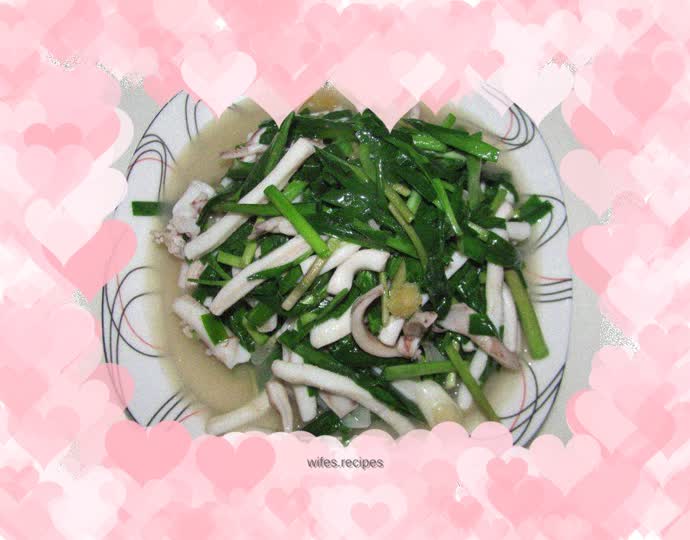
Overview
Squid is rich in protein, calcium, phosphorus, iron, etc., and also contains very rich trace elements such as selenium, iodine, manganese, copper and other foods. Squid is rich in calcium, phosphorus, and iron, which is beneficial to bone development and hematopoiesis, and can effectively treat anemia. In addition to being rich in protein and amino acids required by the human body, squid also contains a large amount of taurine, which can suppress cholesterol levels in the blood, relieve fatigue, restore vision, and improve liver function; the polypeptides and selenium contained in it have anti-viral and anti-ray effects. Squid is generally edible by everyone, but should not be eaten by patients with spleen and stomach deficiency, hyperlipidemia, hypercholesterolemia, arteriosclerosis and other cardiovascular and liver diseases, as well as eczema, urticaria and other diseases. Traditional Chinese medicine believes that squid has the functions of nourishing yin and nourishing the stomach, replenishing deficiency and moisturizing the skin. Eating it with leeks is a good combination in terms of taste and food complementarity. . . .
Tags
Ingredients
Steps
-
One squid, thawed.

-
Wash the squid and remove the outer black film (you don’t have to remove it).

-
Pick a handful of leeks and wash them clean.

-
Cut the squid into strips and cut the leeks into sections.

-
Put oil in the pot, add onions and ginger and sauté until fragrant.

-
Add the squid and stir-fry for a while (this process needs to be quick).

-
Add the leeks and stir-fry briefly, season with salt and remove from the pan.

-
A simple side dish...
