Marshmallow
Overview
The first one: It is best to prepare a thermometer. Anything involving sugar generally has strict temperature requirements. The temperature at which the sugar is boiled plays a key role in the softness and hardness of the finished product. For example, this marshmallow requires the sugar to be boiled to about 118°. When the sugar temperature rises, the process from 100° to 118° will be slower. It is difficult to judge without a thermometer. Second: The mat where the marshmallow is placed must be sprinkled with powder. The powdering is of course to prevent sticking. It is best to sprinkle more powder to make it easier to take it out. Third: Preservation. It’s my first time making marshmallows and I don’t know how to preserve them. I’m worried about whether they will melt when exposed to the air. But according to my practical experience, marshmallows are generally not easy to store. After solidification and dusting, just put them in a small bag and seal them. I have a few marshmallows that have been left outside without protection for many days. Let’s just take a look at it like this
Tags
Ingredients
Steps
-
Add the egg whites and lemon juice, then add the sugar in batches and beat until stiff peaks (lemon juice is added for better whipping, you don’t have to add it if you don’t have it)

-
Put the sugar ingredients into the pot, cook over low heat until it reaches 118 degrees, and turn off the heat

-
Immediately add the soaked gelatine to the cooked sugar and stir

-
Slowly pour the cooked sugar liquid into the meringue

-
Beat at medium-high speed until smooth, then switch to low speed and beat until the temperature drops to about 45°

-
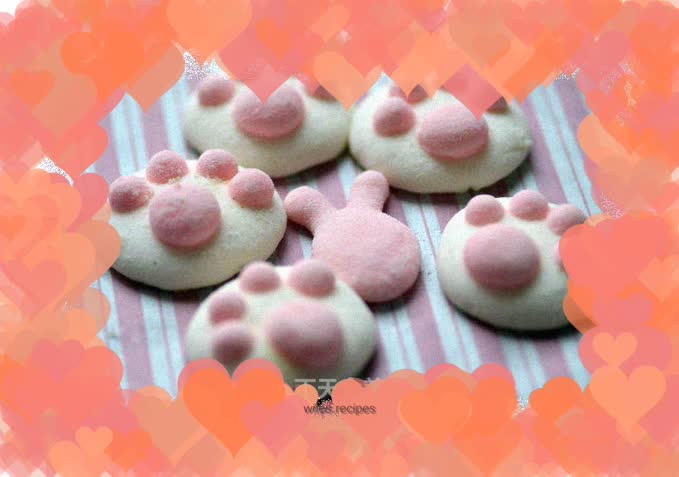
Fold out 1/4 of the prepared meringue and add a little bit of red coloring, mix well, and put them into piping tape

-
Sprinkle hand powder on the silicone mat, cut a small opening on the piping tape and squeeze out the white meringue, let it dry for a while

-
When the meringue becomes less sticky when touched with your fingers, squeeze on the pink meringue, and then sprinkle a layer of powder on the surface after it dries
