Old Beijing Pianer Soup
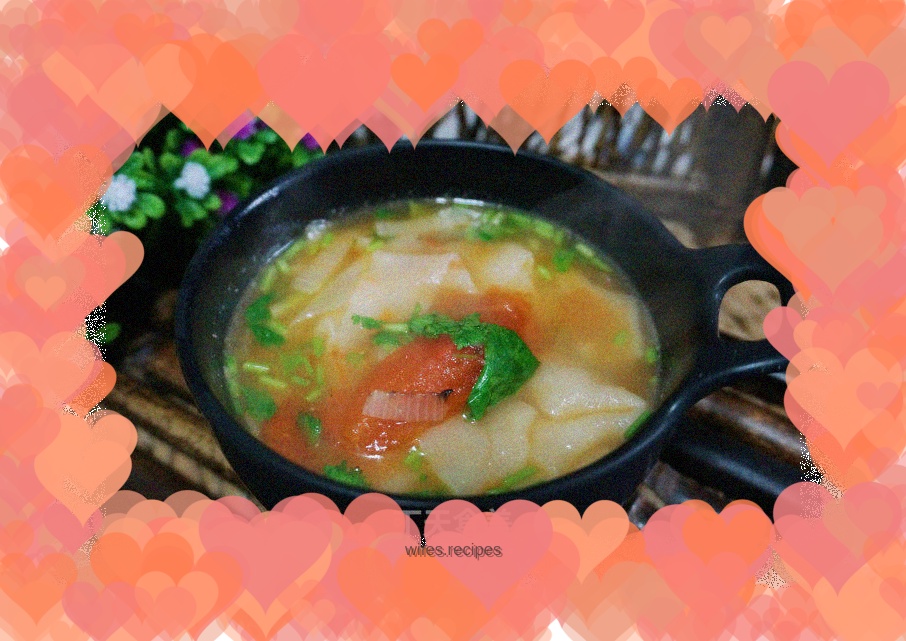
Overview
As a northerner, I have a special liking for pasta. I can say without hesitation: I grew up eating noodles. I heard from my mother that the first complementary foods I took when I was a child were pasta and pieces of soup, and I never got tired of eating them. When I grow up, I still like to eat Pian'er soup made by my mother. The presentation is mouth-watering. When you eat it, the soft and smooth noodles melt in your mouth, suitable for all ages; the taste of the soup is even more appetizing. To this day, sometimes when I am sick and feel uncomfortable, my only appetite is for a bowl of Pian'er soup. In the morning, it can be used as breakfast to wake you up in a good mood for the day. It is a good choice to enjoy at any time for three meals a day. (If you are pressed for time in the morning, you can make the noodles in advance and store them in the refrigerator. It is ok to use them the next morning.) Today I will share with you my family's method of making Pian'er soup.
Tags
Ingredients
Steps
-
Add appropriate amount of flour to the dough and let it rise for 20 minutes. The noodles should be slightly softer. Different flours have different water absorption properties, so the amount of water used is also different. The method is not to add too much water at once, add it little by little, and knead the noodles while adding water.

-
Roll out the dough into thin sheets. When rolling out, put some flour underneath to prevent it from sticking to the chopping board.

-
Use a knife to cut into strips of about 2 cm.

-
Peel the tomatoes and cut into small pieces.

-
Put a little oil in the pot, heat the oil 60%, add the chopped green onions and stir-fry. Add the chopped tomatoes. Stir fry.

-
Add salt and continue to stir-fry to release the juice.

-
Pour in enough hot water and bring to a boil.

-
Stretch the cut dough into the pot. When putting the dough in, stretch the dough toward both ends with both hands. (I couldn't take a full picture of this action because I wanted to take pictures with one hand.) In this way, the dough will be thinner, easier to cook, and softer when cooked.
