Italian-style starter ciabatta
Overview
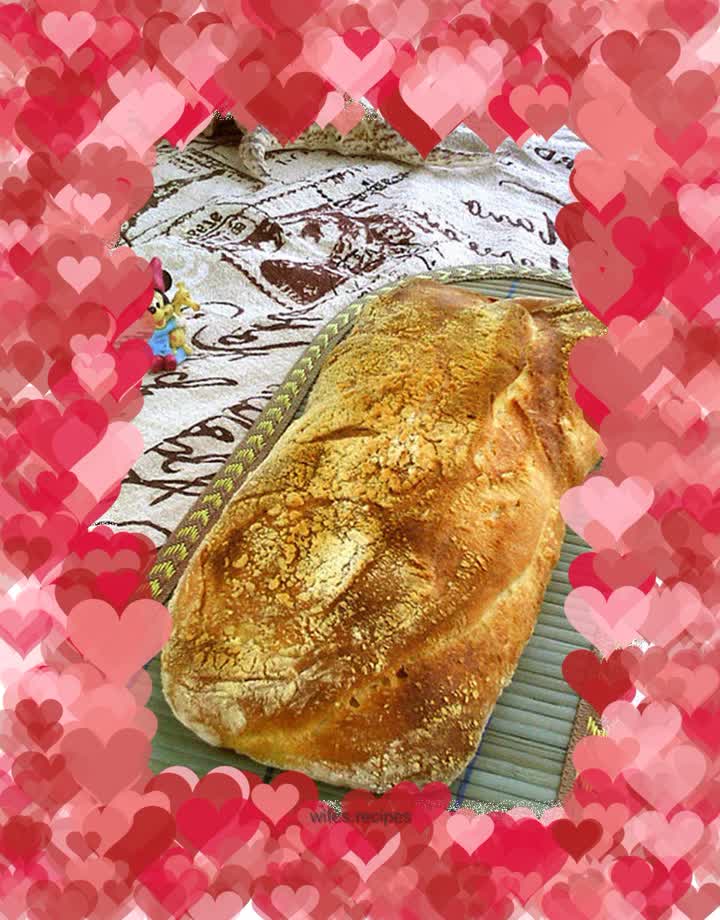
This bread has large air holes and an irregular shape. . . It comes from the ancient countryside and is made of loose dough. It was not named ciabatta until the middle of the 20th century. The name was given by a baker from Lake Como in northern Italy. Through observation, he found that the bread looked particularly like the slippers worn by dancers in the area, so he named the bread 'Lake Como Slipper Bread'. A whole new tradition was born, and in the second half of the 20th century, this ciabatta became the unofficial national bread of all of Italy, representing the strength and local delicacy of Italian country bread. You can make this dough using a large amount of Polish starter or Italian starter. . . You can also add some milk or olive oil to make the dough softer. The Polish sourdough ciabatta I made before only used water, but this time I used milk and olive oil to make the Italian sourdough ciabatta. Compared with fat-free bread with water added, dough with olive oil, milk or other nutrients added will be softer and more delicate. Let’s make steam again. The last time I heated water into a heated porcelain plate, the broken porcelain plate died prematurely. This time, change it up. In a broken bowl - a broken bowl, it must be a broken bowl, you won't feel bad if it is broken - fill it with hot water, put it in the oven, and preheat it together with the oven. It won't produce a lot of steam throughout, but it should continue to evaporate as it bakes, adding a bit of humidity to the oven. This little bit of humidity may be insignificant or may have no effect, but you might as well try what effect it has. That kind of large amount of steam may only be solved by spraying water, but that little watering can seems to be somewhat powerless. Give it a try. . . Effect? The effect seems not obvious. . . .
Tags
Ingredients
Steps
-
Italian starter: 95g high-gluten flour, 0.5g dry yeast, 60g water

-
Mix the starter ingredients

-
Knead into smooth dough

-
Place in a bowl and ferment at room temperature for 3-4 hours

-
The dough has grown

-
Refrigerate overnight

-
Take it out before use, cut into 10 small pieces, cover with plastic wrap, and let warm for 1 hour

-
Main dough: 85g high-gluten flour, 3.5g salt, 1.5g dry yeast, 66g milk, 18g olive oil

-
Pour the flour, salt and yeast into the bread bucket and mix

-
Add Italian starter, milk and olive oil

-
Put it into the bread machine and start the dough mixing program

-
The dough is in the shape of a smooth and sticky ball

-
Sprinkle flour on the counter and take out the dough

-
Sprinkle the surface of the dough generously with flour

-
Pat into a rectangular shape and let rest for 2 minutes

-
Stretch both ends to 2 times

-
30% off

-
Apply oil on the surface

-
Sprinkle with flour, cover with plastic wrap, and rest for 30 minutes

-
Stretch again

-
fold

-
Apply oil on the surface

-
Sprinkle with water and flour, cover with plastic wrap, and let the dough ferment on the counter for 90-120 minutes.

-
Dough expansion

-
Spread flour all over the surface

-
Spray oil and flour on fermentation cloth

-
Carefully transfer the dough and stretch

-
fold

-
Apply oil on the surface

-
Sprinkle with flour, cover with a towel, and let rise for 45-60 minutes

-
The dough has grown

-
Place an empty roasting pan in the oven with a bowl of hot water in the bottom. Preheat to 230 degrees

-
Spread grits on board

-
Carefully transfer the dough to the board

-
Stretch to 23-30 cm

-
Carefully slide the dough into the baking dish in the oven. In the middle layer, heat up and down to 230 degrees, and spray water on the four walls of the oven every 30 seconds for a total of three times. Close the oven door and bake for about 20-30 minutes

-
The surface is brownish yellow and comes out of the oven
