The dough turned cold, this is how it was done, I learned a lot!
Overview
The weather is getting hotter, and it’s the season to eat cold noodles again, but the little cook accidentally saw a news article "Do you really dare to eat the cold noodles sold on the street?" 》, Liangpi, something you would just buy a bowl of at a roadside stall when you have no appetite in the hot summer. Now I really don’t dare to eat it. When you eat the huge piece of Liangpi you bought outside, haven’t you ever thought about the elasticity of the teeth and the dazzlingly white skin? Doesn’t it look like you are eating a plastic bag? In fact, making cold noodles at home is also very simple. You only need to wait for a few hours. When you magically turn a piece of dough into refreshing hand-made cold noodles poured with hot red oil, believe me, you don’t need praise from others for your full sense of accomplishment!
Tags
Ingredients
Steps
-
Liangpi Ingredients: 500g natural flour (make about 4 bowls of Liangpi) 250g water Ingredients: Cucumber: appropriate amount of mung bean sprouts: appropriate amount of seasoning: Sauce: minced garlic, sesame oil, salt, water, white sugar and red oil Chili: dried chili noodles, pepper, fennel, tangerine peel, white sesame sesame paste (sesame paste and boiled water are mixed in a ratio of 1:1) Balsamic vinegar

-
Add 250g of cold water to 500g of natural flour and mix into dough. Start kneading the dough. Knead the dough to make it harder and firmer. Beat it repeatedly until it becomes a smooth dough that is not sticky to your hands. In this way, the inside of the dough is fully combined and the gluten washed out is enough to complete the gluten. After kneading the dough, let it rest for half an hour. This is to allow the dough to ferment itself slightly and develop better gluten.

-
Put some cold water in a slightly larger basin and put the dough in it.

-
Start washing the dough by kneading it in water, holding the dough with your hands and washing it like kneading clothes.

-
The water becomes whiter and whiter, the batter is washed into the water, and the remaining dough in your hand is gluten. At this time, the dough in your hand will become more and more loose. It doesn't matter. Just filter it at the end. Knead the dough until the water is very turbid, then change the basin of water, and wash it about four or five times. The only thing left in your hand is a lump of dough that feels a bit astringent and soft and bouncy. No matter how you wash it, the water will not wash it out. At this time, you have successfully washed the dough and got gluten, an accessory product of Liangpi.

-
Pour all the washed pasta water into a large container and keep it. Do not throw it away. What comes out is the batter water for making cool skin. Now you need to wait quietly. The batter water usually needs to stand for 5-6 hours before the clean water is completely separated, leaving the cool skin paste for steaming the cold skin. (It is best to use a transparent container to hold the batter water, so that you can easily observe the degree of separation between the water and the cold skin paste).

-
You can use this gap to prepare the auxiliary ingredients, steam the gluten, and fry the spicy red oil. Steam gluten: Mix the previously washed gluten with a little baking powder, wait for about half an hour, set up a steamer, turn on high heat, and steam in a plate for 15 minutes, until the gluten steams out the air holes, take it out and let it cool, cut into small dices, pure handmade wheat gluten without any additives is made (if it is not steamed immediately, the washed gluten can be stored in water).

-
After the pot is hot, add rapeseed oil (any other vegetable oil is acceptable), heat it to 40% heat, put the fennel, peppercorns, old tangerine peel, and white sesame seeds into the oil and fry lightly.

-
When you see signs that the oil is starting to heat up (it doesn't smoke, but the fried things you put in it start to bubble), immediately pour the oil into the bowl containing the dried chili noodles (the bowl must be heat-resistant, glass bowls will not work), stir the chili noodles, and the temperature of the oil will slowly force the red oil out of the dry chili noodles in the bowl.

-
After pounding the garlic cloves into minced garlic, add sesame oil, salt and purified water according to your personal taste to get the sauce.

-
After waiting for 5 hours, the white batter just now showed a light yellow semi-clear water state on the surface. This means that the batter has settled. Pour away the water on top, leaving behind a thick cold skin batter.

-
Then use a spoon to stir the noodles sinking to the bottom of the basin evenly, pass the noodles through a sieve, and sieve out the gnocchi in the noodles, and then steam them in the pot.

-
Prepare two flat-bottomed stainless steel plates for replacement, and brush each plate with a thin layer of sesame oil.

-
Pour a spoonful of pasta water into a flat plate so that the cold skin slurry covers the iron plate thinly, put it into a pot of boiling water, cover the pot and simmer for about three minutes. If you see big bubbles in the cold skin, it means it is ready. You can open the lid and take it out. Do not open the lid during cooking, as the cold skin will break as soon as you open the lid. Put the steamed dough together with the plate into a basin of cold water and let the dough cool down a bit. At this time, you can brush oil on another plate and pour the dough into it and put it into the pot for steaming.

-
After the dough is slightly cool, you can peel it off from the plate. The steamed dough will be translucent and very tough. Coat each layer of steamed dough with sesame oil to prevent the dough from sticking together, and put the prepared dough together.

-
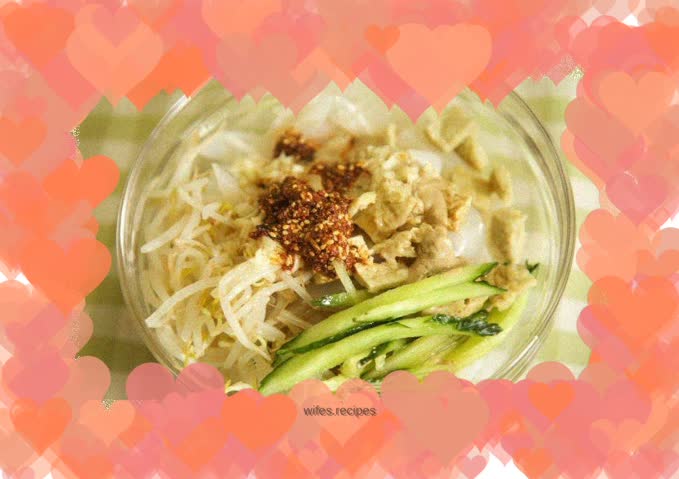
The cold skin is now finished, and all that's left is to mix the cold skin. Fold the cold skin and cut it into 1cm wide strips. Add red oil chili pepper, sauce, balsamic vinegar, prepared sesame paste according to personal taste, add prepared gluten, cucumber shreds, and prepared mung bean sprouts, and you're ready to eat.
