Classic dish, new recipe--Kung Pao Chicken
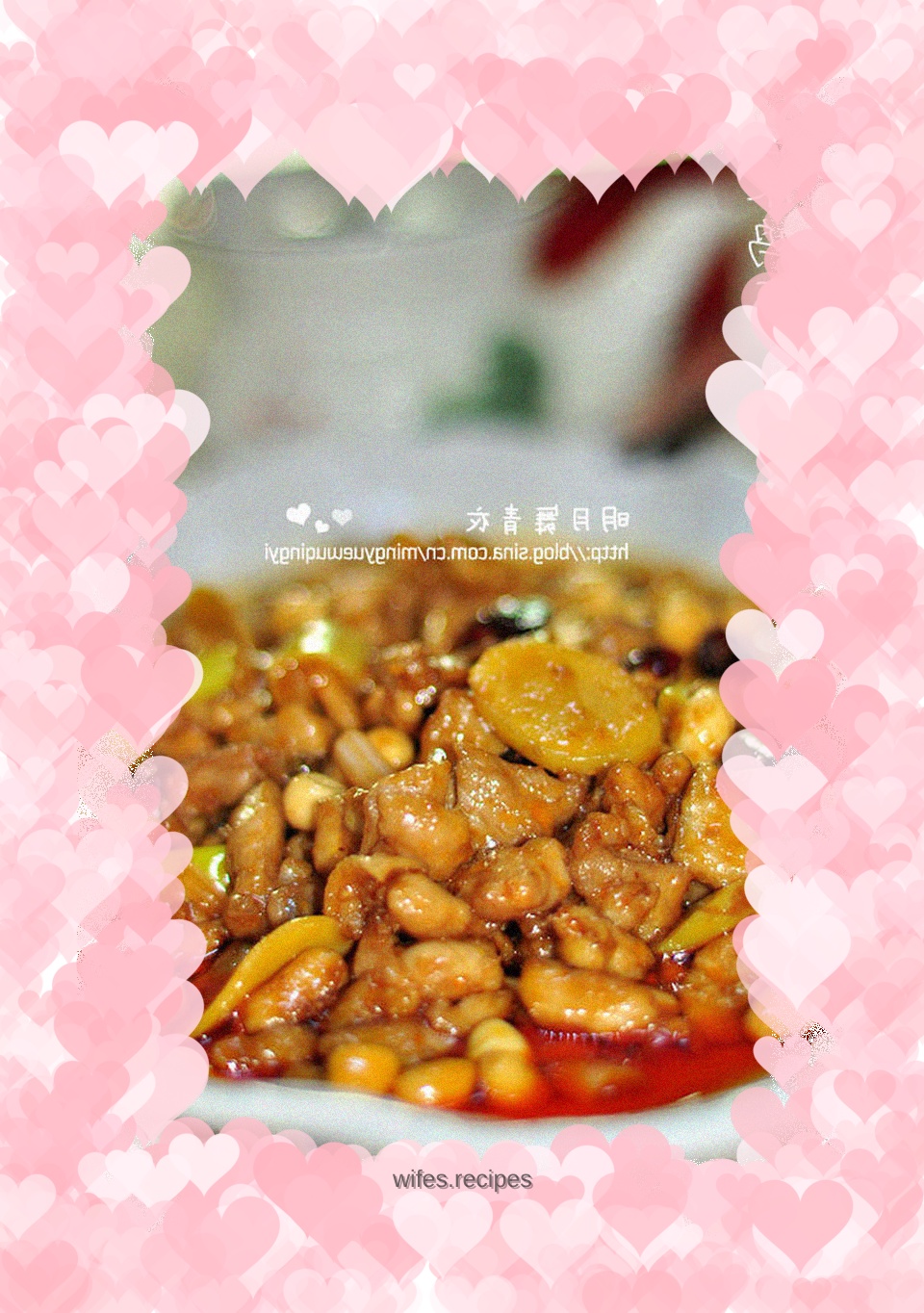
Overview
This dish is a famous traditional Guizhou dish. It is red but not spicy, spicy but not strong, has a strong spicy flavor, and the meat is smooth and crispy. It is said that the founder of this dish, Ding Baozhen, was from Zhijin, Guizhou. He served successively as governor of Shandong and governor of Sichuan. He often entertained guests with this dish in his hometown, and it has been passed down to this day. In 1918, Zhao Huimin, who studied at Waseda University in Japan and was the former secretary-general of Guiyang Municipal People's Political Consultative Conference, introduced Kung Pao Chicken to Japan, which was highly praised by Japanese people. Because of its spicy taste, the tenderness of the chicken and the crispiness of the peanuts, it is widely welcomed by the public. Especially in Western countries such as the United Kingdom and the United States, Kung Pao Chicken is so popular that it has become almost synonymous with Chinese food. The situation is similar to spaghetti in Italian food. Nowadays, Kung Pao Chicken is a common dish in Chinese restaurants of all sizes. As for Kung Pao Chicken written on some menus, some people think that the cooking method is stir-frying. In fact, this is a misunderstanding and the origin of Kung Pao Chicken is not clear. Speaking of Kung Pao Chicken, of course we cannot fail to mention its inventor - Ding Baozhen. According to the "Manuscript of Qing History": Ding Baozhen, courtesy name Zhihuang, was born in Pingyuan (now Zhijin), Guizhou. He was a Jinshi in the third year of Xianfeng and was appointed governor of Sichuan in the second year of Guangxu. It is said that Ding Baozhen was well versed in cooking and liked to eat chicken and peanuts, especially spicy food. When he was the governor of Sichuan, he created a delicious dish made of diced chicken, red pepper, and peanuts stir-fried in a pot. This delicious dish was originally just a private dish of the Ding family, but later it became more and more popular and became known to everyone. But not many people know why it was named Kung Pao. The so-called palace protector is actually Ding Baozhen's honorary official title. According to the explanation in the Dictionary of Chinese Officials of the Past Dynasties, officials at all levels in the Ming and Qing dynasties had false titles. The highest-ranking virtual titles include Taishi, Shaoshi, Taifu, Shaofu, Taibao, Shaobao, Taizi Taishi, Prince Shaobao, Taizi Taifu, Prince Shaofu, Taizi Taibao and Prince Shaobao. The above are all fictitious titles given to important officials in the court, and some of them were given posthumously. They are generally called palace titles. After Xianfeng, these virtual titles no longer used so-and-so master but more so-and-so Bao, so these highest-level virtual titles had another name - Gong Bao. Ding Baozhen ruled Shu for ten years. He was an upright and upright official and made many achievements. He died in office in the eleventh year of Guangxu. In recognition of his achievements, the Qing court gave him a posthumous gift to the crown prince and Taibao. As mentioned above, Prince Taibao was one of the Kung Pao, so the dish he invented was named Kung Pao Chicken, which is also a commemoration of Master Ding. Times have changed, and many people no longer know what Kung Pao is, so they take it for granted and write Kung Pao Chicken as Kung Pao Chicken. Although there is a one-word difference, it changes the original intention of commemorating Ding Baozhen! I have made Kung Pao Chicken several times, and the methods are similar. However, this time the method is a little more complicated. You need to prepare red oil in advance. The final fried Kung Pao Chicken soup will be bright red, and only red oil will overflow. Make it red but not spicy, spicy but not strong, spicy and spicy, and the meat is smooth and crispy.
Tags
- hot dishes
- home cooking
- common dishes
- meat dishes
- chinese cuisine
- children
- sichuan cuisine
- spring recipes
- summer recipes
- autumn recipes
- winter recipes
- lunch
- famous dishes
- add rice wine
- balsamic vinegar
- chicken legs
- dried chili pepper
- egg white
- green onions
- light soy sauce
- old soy sauce
- peanuts
- pepper
- red oil
- rice vinegar
- sichuan pepper oil
- starch
- white sugar
- zanthoxylum bungeanum
- ginger slices
- salt
Ingredients
Steps
-
Prepare materials. You can buy ready-made peanuts, or you can fry and peel them yourself. Cut the scallions in half and cut into 1.5cm pieces. Cut the dried chilies into small pieces and remove the chili seeds inside. Slice ginger.

-
Debone the chicken legs. (As shown in the picture) First, use a knife to cut a circle on the lower end of the chicken legs and cut off the skin and tendons. Then cut the large side of the chicken leg vertically upward and cut off the part where the bones are connected.

-
Then cut off the attached meat and tendons along the bones.

-
The bones and meat of the chicken legs have been completely separated. The picked bones can be made into soup stock without throwing them away.

-
Use the back of a knife to chop the chicken in a cross pattern a few times, then cut into strips and then into 1.5 cm pieces. Do not remove the chicken skin.

-
Add the extra amount of rice wine, salt, starch, and egg white to the chicken and stir in one direction. Do not use scratches, as the chicken will easily break.

-
Then add 1 spoon of rice wine, 1 spoon of sugar, 1 spoon of rice vinegar, half a spoon of balsamic vinegar, soy sauce (half spoon of dark soy sauce and half spoon of light soy sauce) and starch and mix evenly to form a sauce and set aside.

-
Pour twice as much red oil into the pot as usual (previous recipe included: homemade red oil).

-
Bring to a boil over high heat, add dried chili peppers, Sichuan peppercorns and Sichuan peppercorns, and stir-fry until the color turns brown.

-
Add the diced chicken and stir-fry over high heat.

-
Add the ginger slices and stir-fry for about half a minute.

-
When the chicken is almost cooked. Add the previously mixed sauce and stir-fry quickly.

-
Pour in a little peppercorn oil and turn off the heat.
